Thursday, June 11th 2026 Reporter: Fakhrizal Fakhri Translator: Nugroho Adibrata 63
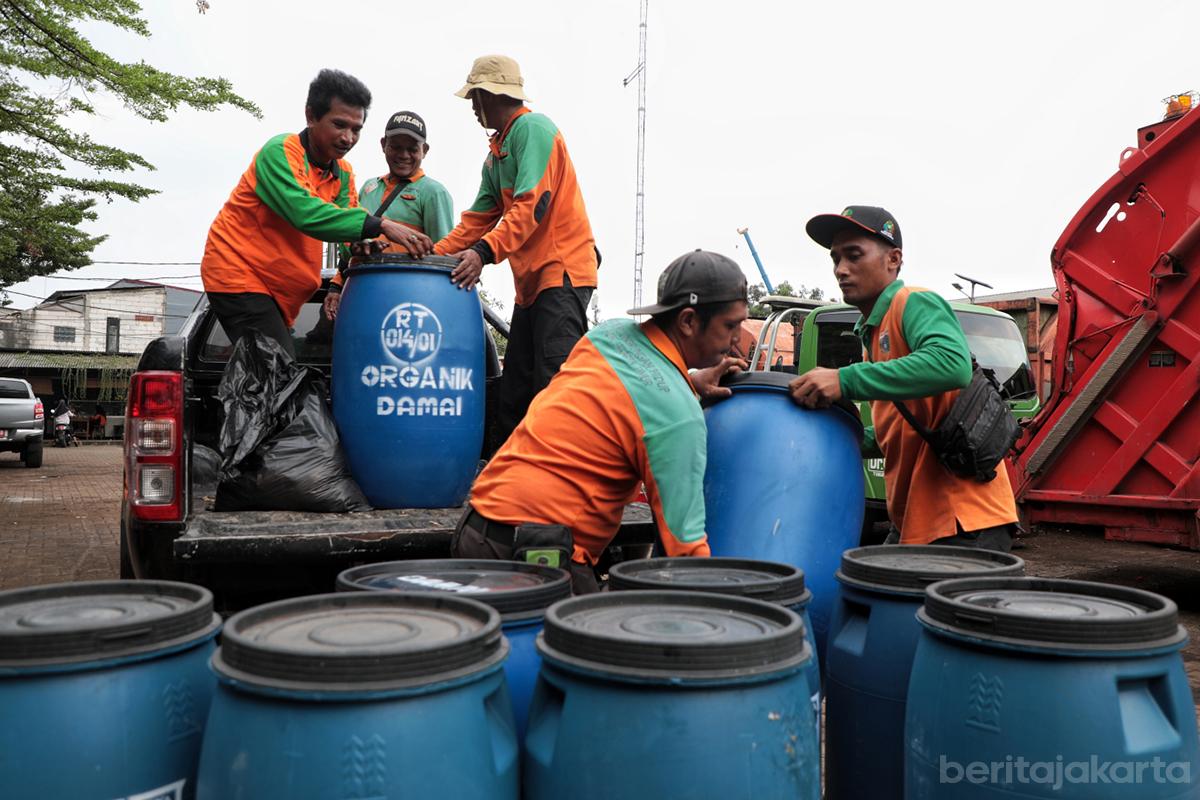
(Foto: Andri Widiyanto)
Jakarta faces a formidable challenge in waste management as the phase-out of open dumping approaches this coming August. The increasingly limited capacity of the Bantargebang Landfill underscores the critical need to enhance waste management initiatives starting from the source.
Jakarta City Council Commission D Chairwoman, Yuke Yurike argues that Jakarta’s waste management must move away from the old transport-to-landfill model. Instead, she advocates for a comprehensive approach, from upstream to downstream.
The waste problem has been a perennial issue for every administration
"The waste problem has been a perennial issue for every administration. We can't just fix the downstream; the upstream and midstream must be resolved with more massive and measurable efforts," she expressed, Thursday (6/11).
According to her, Gubernatorial Regulation No. 77/2020 already mandates community-based waste management through RW-level waste banks—a key step in reducing volume and encouraging waste sorting at the source.
She also highlighted that several facilities, including the Bantargebang Landfill, Rorotan RDF, and TPS3R, must be fully optimized. For instance, the Rorotan RDF facility, despite its 2,500-ton daily capacity, is currently performing below its intended output.
She noted that the most significant hurdle is the narrow window of time to end open dumping practices. Going forward, waste reaching final processing sites must be pre-processed to leave only residue.
"This has impacted the frequency of transport cycles to Bantargebang, causing waste collection to become slower in certain regions," she explained.
Yuke welcomed the 'Jaga Jakarta Bersih' initiative launched by the Jakarta government to bolster source-based waste segregation. However, she argued that the initiative’s success remains deeply dependent on both community engagement and a robust management system equipped to process the resulting sorted waste.
Beyond enhancing processing infrastructure, Commission D also encourages the development of a circular economy via composting and maggot farming. To this end, the Environmental Agency is requested to identify and map waste banks, waste management communities, and potential market opportunities for processed waste outputs.
Meanwhile, Yuke stressed the significance of private sector engagement and the implementation of digital data management at the RW level. Such measures are vital for achieving a more precise determination of the necessary waste fleet and facility capacities.
"Jakarta has plenty of young innovators in waste management whose potential should be nurtured to become part of the solution," she continued.
She also alluded to the planned waste collection levy, asserting that the policy must go hand-in-hand with better service quality and proper infrastructure. She added, the rollout needs to be transparent, equitable, and mindful of the people's socio-economic status.
"The key condition is infrastructure readiness. Once the service is up to standard, the policy will be much easier for the public to accept," she emphasized.
![<?//= $potret[0]->photo_filename ?>](https://multimedia.beritajakarta.id/photo/potret-jakarta/2026/06/auD73AVAVGxdqIwJuwQp7K1KvjNuewNb.jpg)