Friday, May 15th 2026 Reporter: Fakhrizal Fakhri Translator: Nugroho Adibrata 120
(Foto: Nugroho Sejati)
The Jakarta City Council Commission A Member, Zahrina Nurbaiti has expressed her appreciation for the Jakarta government’s initiative to launch the "Waste Segregation and Processing at Source Movement" through Gubernatorial Instruction No. 5/2026.
According to her, the target of reducing waste disposal at the Bantargebang Landfill to only residual waste by this coming August is a major mission that must be bolstered by downstream waste management infrastructure.
The primary key remains a shift in community behavior upstream
“The optimization of the Rorotan RDF (Refuse Derived Fuel) plant and 3R (Reduce, Reuse, Recycle) waste treatment sites is crucial. However, the primary key remains a shift in community behavior upstream. If waste segregation at the source does not work, the burden on processing facilities will remain heavy,” she expressed, Friday (5/15).
She also highlighted the readiness of the City administrations and Seribu Islands Regency administration ahead of the ban on open dumping, which is set to take effect in August.
According to Zahrina, the Seribu Islands face unique geographical challenges that require more innovative and independent waste management systems, reducing reliance on transporting waste to mainland Jakarta.
“The local government must ensure that every urban ward has an optimally functioning intermediate waste treatment facility,” she explained.
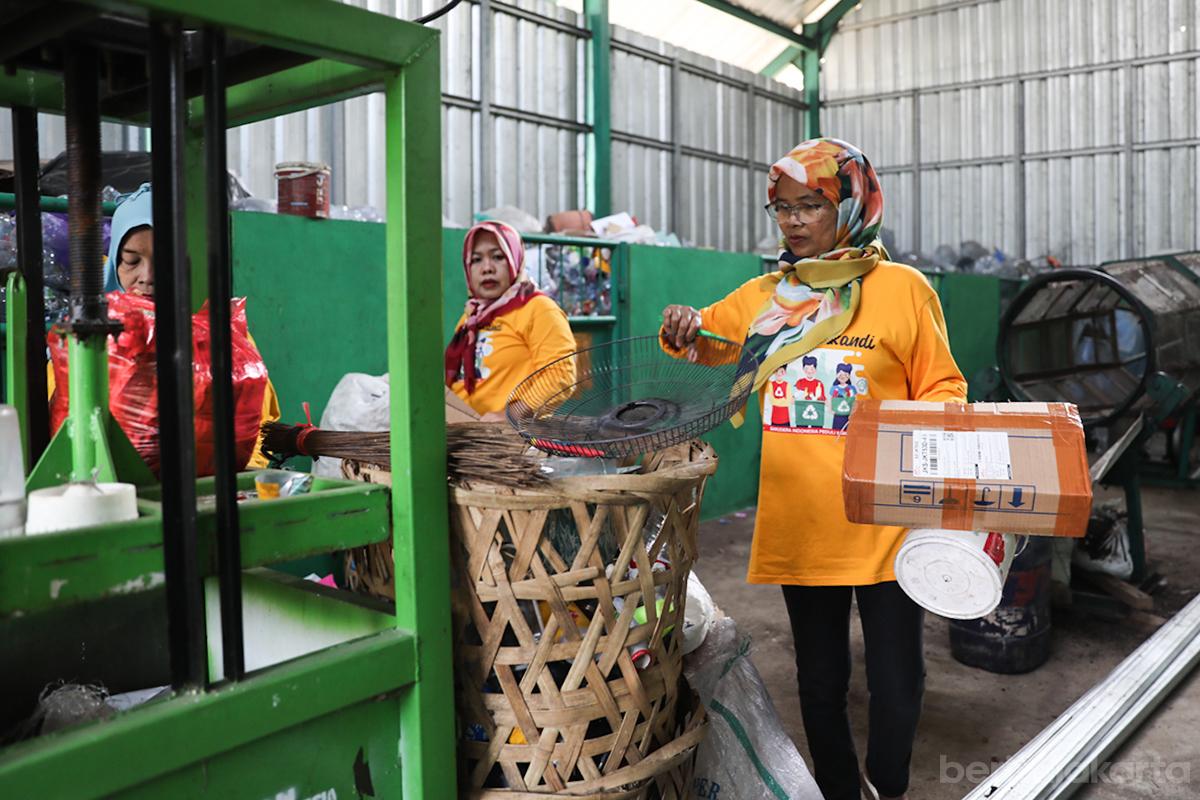
She emphasized that housewives and local communities are vital to the success of the waste segregation movement.
“Housewives and local communities are not merely supporters; they are the spearhead of a cultural shift in waste segregation. That change begins in the kitchen and at the dining table,” she remarked.
She added that communities such as the Family Welfare Empowerment (PKK) and Waste Banks play a strategic role in educating the public to ensure inorganic waste is no longer simply discarded but instead integrated into a circular economy cycle.
Further, she encouraged housewives to start the habit of segregating waste at home through simple steps.
“By simply separating organic and inorganic waste into two different bins at home, we are already helping to reduce the waste accumulation in Jakarta,” she explained.
She also urged the public to collaborate with local Waste Banks so that inorganic waste can provide economic value and benefit families.
On the legislative side, her party continues to monitor the readiness of regulations at the sub-district and ward levels to support the policy.
Zahrina mentioned that oversight is being conducted to ensure the Gubernatorial Instruction on the Waste Segregation Movement has a solid operational foundation through the implementation of Bylaw No. 4/2019 on Waste Management.
She expressed hope that this movement would serve as a turning point toward a cleaner, healthier, and more beautiful Jakarta.
“We're encouraging every ward to establish clear rules, including sanctions that are firm yet educational for violators. Further, the availability of segregated waste transport must be guaranteed so that the residents' efforts in sorting their waste do not go to waste,” she concluded.
![<?//= $potret[0]->photo_filename ?>](https://multimedia.beritajakarta.id/photo/potret-jakarta/2026/05/W8LSrQmEPSo6M0utPNNkBbLMiiKQfW4Z.jpg)