Monday, January 26th 2026 Reporter: Budhi Firmansyah Surapati Translator: Nugroho Adibrata 532
(Foto: Andri Widiyanto)
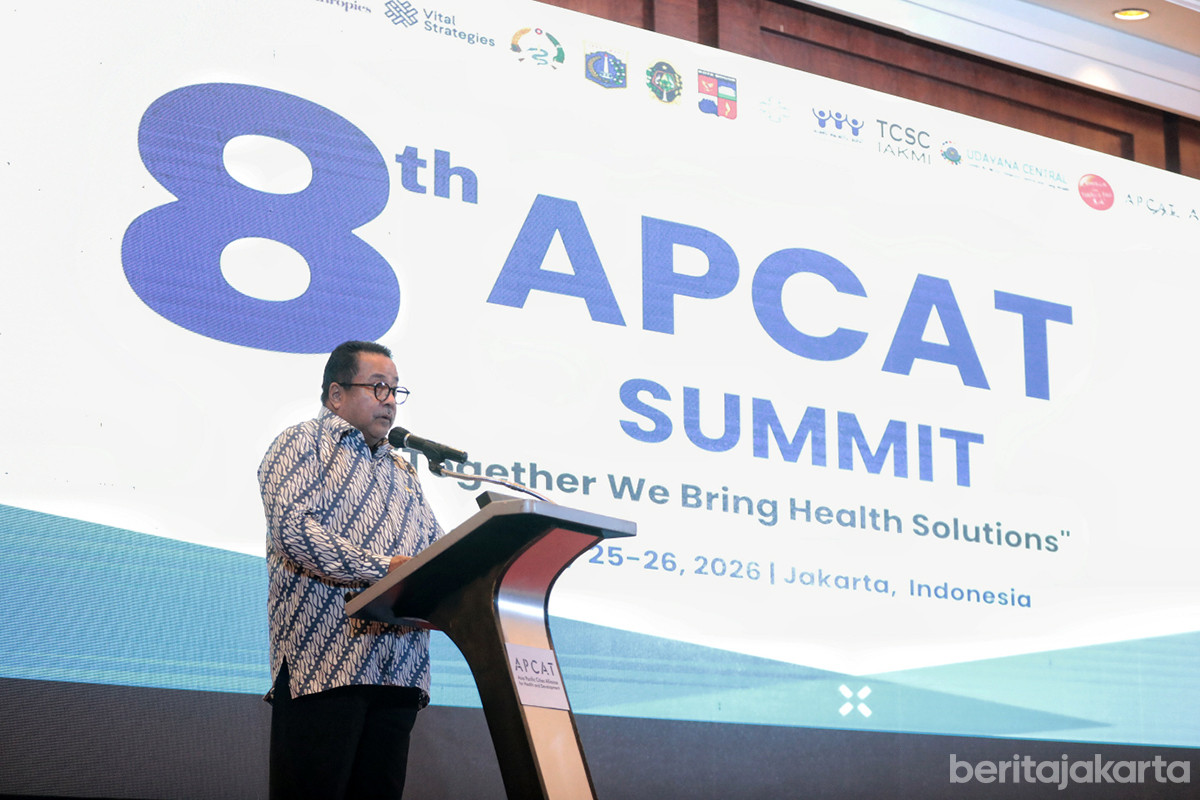
Jakarta Vice Governor Rano Karno underscored the city's dedication to tobacco control to protect public health during the 8th Asia Pacific Cities Alliance for Health and Development (APCAT) Summit.
Jakarta has adopted a decisive stance
Speaking before delegates from across Indonesia at the JW Marriott Hotel, South Jakarta, on Monday (1/26), Rano emphasized that these policies are vital for maintaining the well-being of the city's residents.
He emphasized that tobacco control has become a cornerstone of Jakarta’s strategic health development. This is because smoking remains a primary risk factor for non-communicable diseases that take a heavy toll on health, economic productivity, and healthcare expenditures.
"Jakarta has adopted a decisive stance. Following a 15-year struggle, the Jakarta City Council has officially passed the regional regulation on smoke-free zones," he remarked.
He clarified that the new rules mandate a ban on smoking and vaping in public areas and workplaces. Then, the regulation outlaws tobacco product displays at retail outlets and prohibits tobacco advertising, promotion, and sponsorship.
For rigorous enforcement, a monitoring system has been set up involving related government departments and Satpol PP.
"Further, tobacco control has been integrated into Jakarta's smart city ecosystem via the JAKI mobile app," he explained.
He noted that the app integration empowers residents to report infractions and fosters community involvement. He stressed, smoke-free zones are not a blanket ban but an effort to manage urban spaces fairly for everyone.
"This policy is not meant to kill economic activity," he asserted, noting that the industry will continue to function under tighter oversight to prioritize public well-being.
To complement these regulations, the Jakarta government is offering smoking cessation programs at local health centers to support those who wish to quit.
Rano added that the city is currently expanding its network of smoking cessation clinics to provide residents with easy access to long-term medical support and counseling.
He stressed that Jakarta’s tobacco control measures are not merely about imposing rules, but serve as a collective movement to protect residents from life-threatening catastrophic illnesses.
"Healthy residents are the essential cornerstone for sustainable urban economic growth," he stated.
Rano reaffirmed Jakarta's dedication to collaborating with APCAT members by sharing successful strategies and bolstering local leadership in tobacco control initiatives.
"Let’s join forces to build healthier, more productive, and smoke-free cities across the Asia-Pacific for our future generations," he called on the delegates.
![<?//= $potret[0]->photo_filename ?>](https://multimedia.beritajakarta.id/photo/potret-jakarta/2026/06/zLHuD597IUTD0f8kc647mMqOzXA05Hrq.jpg)