Saturday, December 27th 2025 Reporter: Budhi Firmansyah Surapati Translator: Nugroho Adibrata 410
(Foto: doc)
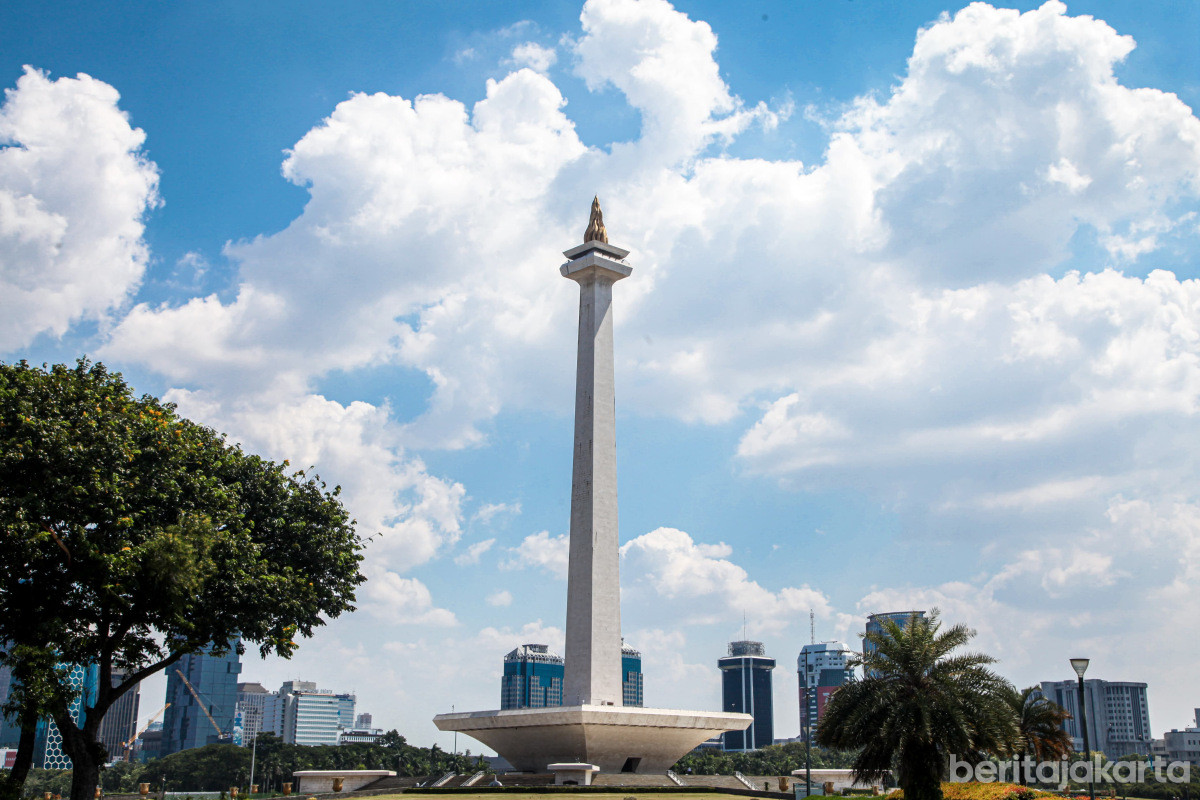
Jakarta has officially promulgated its City Budget (APBD) 2026 on set at Rp 81.32 trillion. This figure represents a significant dip from the Rp 91.86 trillion allocated in the APBD 2025.
We will maximize every rupiah
Financial records show that the Rp10.54 trillion budget reduction is largely due to a substantial cut in central government transfers. Specifically, the Regional Transfer Funds (TKD) plummeted from Rp26.14 trillion last year to just Rp 11.16 trillion for the upcoming 2026 period.
Tax Revenue Sharing (DBH) saw the steepest cut in the new budget, falling by Rp 14.79 trillion.
Responding to the fiscal outlook 2026, Governor Pramono Anung asserted that Jakarta will remain focused on critical issues: waste, floods, stunting, poverty, and traffic congestion.
"We will maximize every rupiah to ensure all Jakartans benefit from this budget," he said on Friday (12/26), underscoring his administration’s commitment to optimal spending.
He expects the finalization of the APBD 2026 and its implementing regulation to fast-track the city administration’s policy rollout from the beginning of the year.
Highlighting the budget's strategic allocation, BPKD Head, Michael Roland noted that 43.06 percent of regional spending—excluding financial aid—is dedicated to mandatory public service infrastructure. This figure surpasses the statutory threshold.
"The current regulation only mandates a minimum allocation of 40 percent," he added.
To surpass it, the Jakarta administration committed Rp 3.77 trillion to develop proper and sufficient urban infrastructure.
Additionally, the government channeled Rp 582 billion toward boosting sustainable economic productivity and competitiveness, while another Rp 17.58 trillion was dedicated to strengthening the city's competitive human capital.
The budget also includes Rp 2.70 trillion for programs to create decent and sustainable livelihoods for the community, Rp 2.36 trillion for dynamic and responsive governance transformation, Rp 7.82 trillion for mobility and Transit-Oriented Development (TOD) areas, and Rp 6.27 trillion for optimizing low-carbon development and climate resilience.
"In the sector of public works and spatial planning, we have allocated the funds into several posts: Rp 3.64 trillion for flood control, Rp 1.38 trillion for waste management, and Rp 289.72 billion for the construction of bridges and flyovers," he detailed.
To bolster urban mobility, Jakarta has allocated a series of transport subsidies: Rp 3.75 trillion for the Transjakarta network, Rp 536.70 billion for MRT Jakarta, and Rp 325.28 billion for LRT Jakarta. Smaller allocations were also set for school buses (Rp 105.38 billion) and waterborne transport (Rp 100.19 billion).
"On the labor front, the city earmarked Rp 63.44 billion for vocational training and Mobile Training Units. Additional funding was approved for driving license programs (Rp 1.2 billion) and fostering an independent workforce (Rp 4.33 billion) to boost local economic productivity," he added.
Prioritizing human capital, the Jakarta administration has earmarked 26.5 percent of its total regional spending—equivalent to Rp 19.75 trillion—for education. This significantly surpasses the national statutory requirement of 20 percent.
Key programs under this budget include the KJP Plus student aid totaling Rp 3.25 trillion and the KJMU scholarship program at Rp 399 billion. Additionally, the province has set aside Rp 282.46 billion for free tuition in private schools and Rp 126.12 billion for the renovation of schools and educational infrastructure.
To bolster public health, Jakarta has designated Rp 1.40 trillion for BPJS Kesehatan premiums and Rp 360.49 billion for expanding healthcare infrastructure. The budget also covers Rp 165.16 billion for medical devices and Rp 43.49 billion for Pasukan Putih 'White Squad' task force.
Further, the city is prioritizing social welfare through significant funding for its social aid programs, specifically Rp 625.89 billion for Elderly Card (KLJ), Rp 100.10 billion for Child Card (KAJ), and Rp 76.45 billion for Disability Card (KPDJ) schemes.
To bolster local commerce, Jakarta has designated Rp 17.59 billion for MSME empowerment and Rp 13.34 billion to promote the use of domestic products. Meanwhile, industrial planning received an allocation of Rp 23.55 billion.
In the digital and communications realm, the administration is prioritizing urban surveillance with a Rp 185.29 billion investment in managed CCTV services, alongside Rp 18.25 billion dedicated to technology-based flood control initiatives.
"Every program will be executed under the principles of transparency and accountability. It is our hope that the APBD 2026 will be felt across the entire Jakarta community,” he asserted.