Wednesday, October 28th 2026 Reporter: Budhi Firmansyah Surapati Translator: Nugroho Adibrata 94
(Foto: Istimewa)
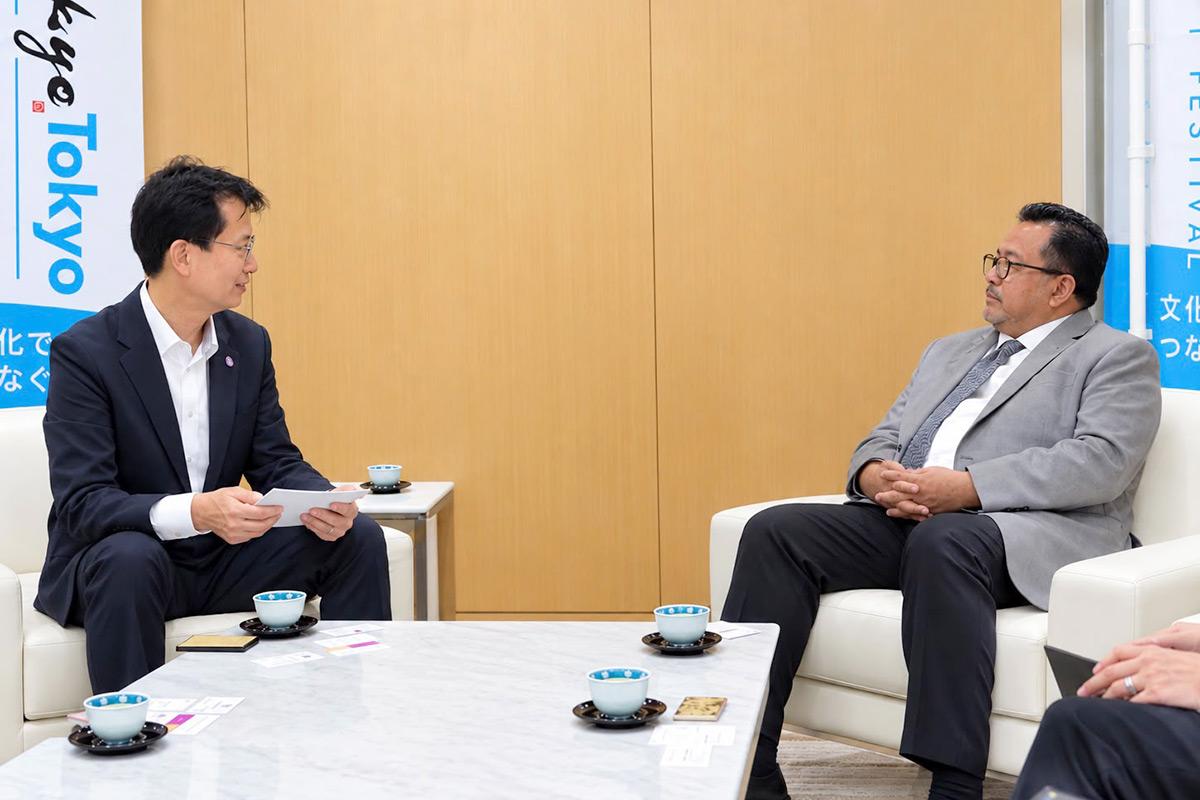
Jakarta Vice Governor Rano Karno held a bilateral meeting with Tokyo Vice Governor Tomohide Sato at the Tokyo Metropolitan Government headquarters on Tuesday (10/27).
The leaders focused on expanding joint initiatives in cultural heritage and transit systems, spanning museum governance, creative sector growth, water transit networks, and zero-emission buses.
Tokyo offers a great model for safe
Rano presented the Kota Tua revitalization project, aiming to keep the heritage area vibrant while protecting its history.
“We want to exchange insight on managing historic sites like Asakusa and Kagurazaka, focusing on community and business involvement,” he added.
Beyond heritage conservation, he emphasized the city’s drive to modernize its museums into dynamic, accessible hubs for learning and culture.
Pointing to models like Arts Council Tokyo, he highlighted Tokyo's approach to grant funding, creative hubs, and public engagement as key reference points for the capital.
He added that such efforts directly reinforce Jakarta's goal of cementing its identity as a global City of Film.
Hence, Jakarta seeks Tokyo’s insights to nurture local filmmakers, expand production facilities, and utilize cinema to boost tourism and urban branding.
On transit infrastructure, Rano highlighted plans to upgrade water transport linking the mainland to the Thousand Islands, aiming to secure essential supplies, ease logistics, and drive island tourism.
“Tokyo offers a great model for safe, cost-effective, and dependable water transit. We are keen to explore their approach to operator agreements, service subsidies, and seamless integration with other transit modes,” he explained.
Jakarta hopes to learn from Tokyo to support local filmmakers and boost tourism through cinema.
Regarding transit, the city aims to improve water transport to the Thousand Islands for better logistics and tourism.
“We want to study Tokyo’s safe and affordable water transit, service financing, and multimodal integration,” Rano added.
Rano also expressed Jakarta’s interest in Tokyo’s green transit initiatives, specifically its adoption of hydrogen fuel-cell and electric buses.
The city aims to leverage Tokyo's insights to evaluate operational expenditures, energy infrastructure, charging networks, and fleet maintenance, customizing the model for Jakarta’s urban transit demands.
“We hope this encounter will further solidify the 30-year partnership between Jakarta and Tokyo through continued exchange of expertise,” he stated.