Wednesday, October 7th 2026 Reporter: Budhi Firmansyah Surapati Translator: Nugroho Adibrata 211
(Foto: Istimewa)
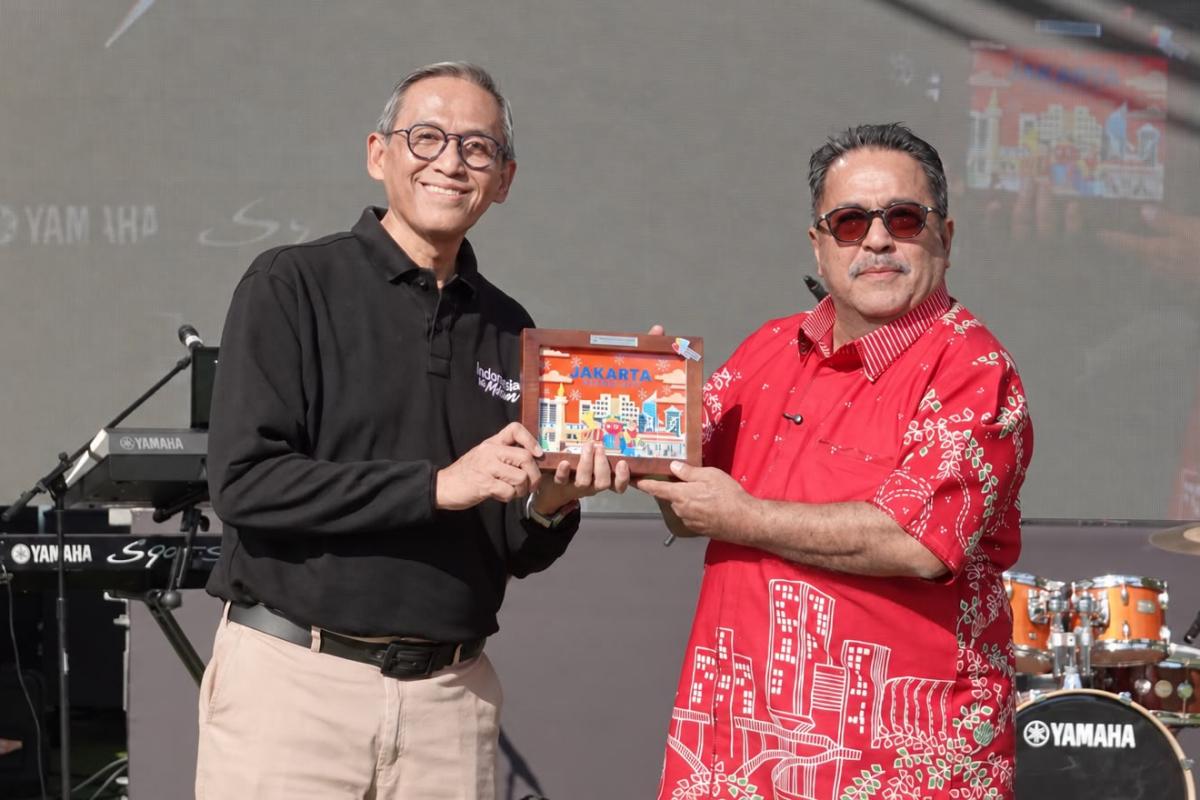
Jakarta Vice Governor Rano Karno joined festivities at Festival Indonesia 2026 in Seoul's Yeouido Hangang Park last Sunday, highlighting growing bilateral ties between the two capitals.
The event provided momentum to strengthen people-to-people diplomacy, paving the way for joint initiatives in creative industries and filmmaking between Jakarta and Seoul.
This festival goes beyond cultural showcase—it bridges our communities
“This festival goes beyond cultural showcase—it bridges our communities. Art, food, and creative expression allow Indonesians and South Koreans to connect deeply and foster lasting friendships,” he expressed, Wednesday (10/7).
Rano's presence constituted part of a series of visits by the Jakarta government at the invitation of the Seoul Metropolitan Government to explore various cooperation opportunities, including the exchange of experience in urban development through culture, creativity, and innovation.
Joined by Indonesian Ambassador to South Korea Cecep Herawan and thousands of Indonesian expatriates, Rano personally presented Jakarta’s cultural and creative highlights.
“Grassroots, people-to-people ties are essential to deepening the partnership between Indonesia and South Korea,” he explained.
Through the event, Indonesia proved it can preserve tradition while fostering modern creativity.
“Jakarta and Seoul have great synergy ahead. We should fill this partnership with real action—covering culture, film, creative youth empowerment, and exchanging urban development insights to thrive on the world stage,” he continued.
Rano underlined the importance of systematic cultural development in commanding global attention.
Citing South Korea’s global wave across film, K-pop, K-drama, gastronomy, and fashion, he highlighted how creative expression can transform into both a major economic driver and a diplomatic soft-power asset.
“South Korea broke through global borders with its culture. The real lesson for Jakarta lies in the underlying strategy: providing space for cultural expression, empowering creators, structuring robust industries, and marketing that talent to the world,” he noted.
Rano underlined that Jakarta’s storied history as a cultural crossroads gives the metropolis a distinct competitive edge on the international stage.
“Transforming Jakarta into a global hub should never require shedding our heritage. Instead, our cultural diversity is our greatest asset—both an endless source of creative inspiration and a powerful tool to elevate Jakarta’s global profile,” he stressed.
Promoting Jakarta Film Commission
Rano’s official itinerary in South Korea continued to Busan, where he attended the Busan International Film Festival (BIFF).
Jakarta’s participation at Asia’s premier cinema forum was aimed at introducing the Jakarta Film Commission to the global film industry network.
The initiative reflects Jakarta’s drive to reinforce its cinematic ecosystem and emerge as a production center for audiovisual media.
Rano described the Busan gathering as a golden opportunity to network with global filmmakers, producers, financiers, and festival curators.
The cross-border partnership is hoped to deliver benefits far beyond the capital, serving as a catalyst for Indonesia’s national cinema landscape.
On its road to marking 500 years, Rano emphasized that Jakarta should look to its rich, storied past not with nostalgia, but as a deep reservoir of resilience and inspiration to shape its future.
Rano stressed that celebrating Jakarta’s five centuries is not merely a marker of chronological age. Instead, the milestone serves as a prime opportunity to present to the world a Jakarta that continues to evolve—increasingly open, modern, and global, yet firmly anchored in its rich history and deep cultural roots.
On that occasion, he invited the people of South Korea to visit Jakarta and collectively celebrate the capital's five-century journey, while getting to know more closely its cultural heritage and community creativity.
“Jakarta never stands still. Our vision is for the world to recognize Jakarta not just for its rich past, but for its dynamic future, creative energy, and relentless drive to collaborate internationally,” he closed.
![<?//= $potret[0]->photo_filename ?>](https://multimedia.beritajakarta.id/photo/potret-jakarta/2026/10/OpzxtjiBw8YxN9J3aukkeSDfpYSh5Atq.jpg)