Saturday, October 3rd 2026 Reporter: Fakhrizal Fakhri Translator: 55 224
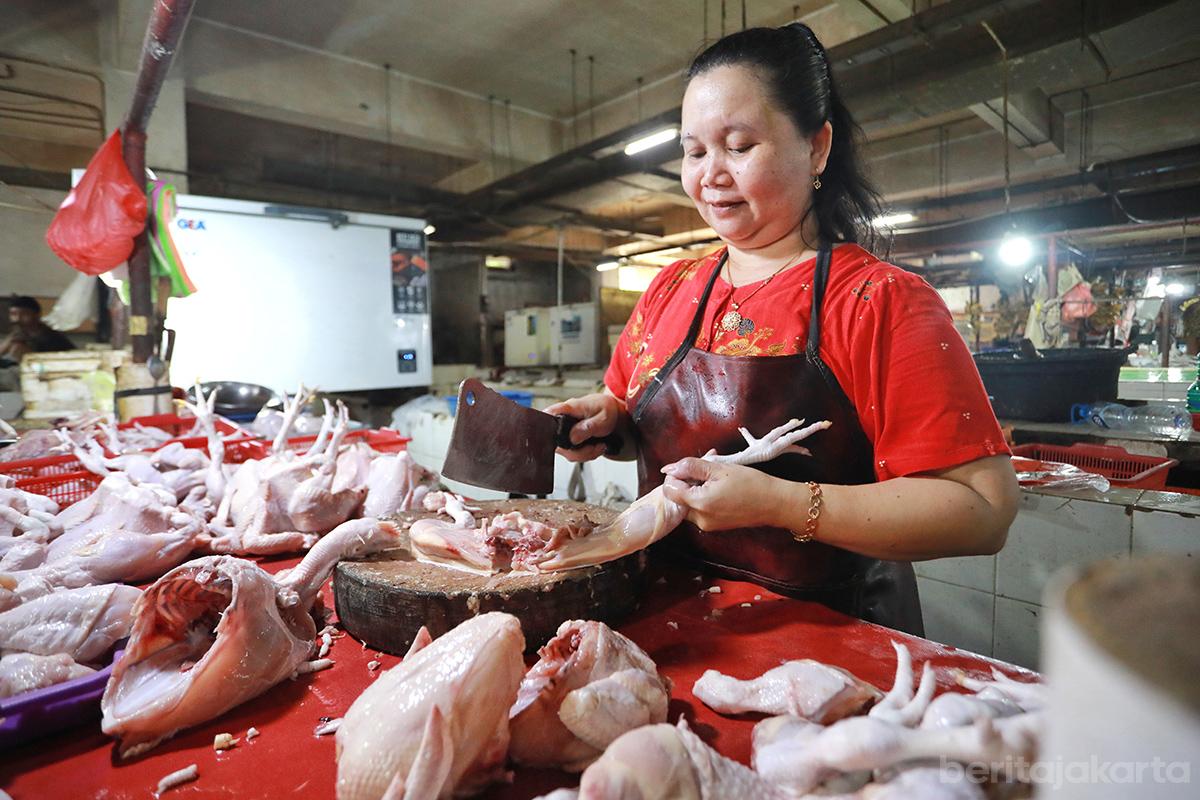
(Foto: Reza Pratama Putra)
Jakarta kept price pressures firmly in check this September 2026, posting month-to-month inflation of just 0.13%—a slowdown from August’s 0.15% and less than half the national average of 0.30%.
Year-on-year, the capital’s inflation settled at 2.71%, outperforming every other province in Java and staying well below the 3.28% nationwide figure.
Inflationary heat came mostly from staple spikes
Food, drinks, and tobacco remained the biggest inflation culprits in September, according to Bank Indonesia (BI) Jakarta head Iwan Setiawan. Even so, price gains in the category cooled to 0.46% (with an 0.08% share), down sharply from 0.81% in the previous month.
"Inflationary heat came mostly from staple spikes—specifically broiler chicken, bird's eye chilies, and rice. poultry prices climbed on the back of pricier animal feed and day-old chicks (DOC)," he expressed, Saturday (10/3).
He explained that a prolonged drought dented bird's eye chili yields across key supplying regions, including West Java, Central Java, and Yogyakarta. The resulting supply squeeze pushed up prices for both chili and rice. However, a harvest-driven influx of shallots and tomatoes helped cushion overall inflationary pressures.
Outside the food basket, healthcare costs jumped to 0.63% in September, more than doubling August's 0.28%.
"The spike came down to a run on face masks as residents scrambled to protect against volcanic ash from Mount Anak Krakatau's eruption. Masks alone added 0.02% to the inflation figure," he explained.
On the deflationary side, transport costs fell 0.10%, continuing August’s 0.45% downward trend. Slumping airfares driven by sluggish travel demand led the drop—outweighing a domestic flight fuel surcharge hike from 30% to 40% of the upper price cap.
"At the same time, price increases for non-subsidized fuel in early September prevented further price drops," he noted.
To keep living costs grounded, Jakarta’s inflation task force (TPID) is reinforcing its hallmark "4K" strategy: affordable prices, steady supplies, friction-free distribution, and transparent communication.
The city's action plan combines subsidized food drives and discount bazaars run by city-owned enterprises (BUMD), coupled with SPHP stabilization rice rollouts by Bulog’s Jakarta-Banten division. On the grassroots level, Jakarta is expanding urban farms and empowering small food businesses.
To close distribution bottlenecks, TPID is deploying fleets of mobile food trucks and sharpening the skills of price enumerators behind the Jakarta Food Info (IPJ) index.
Looking ahead, cross-sector teamwork will be dialed up to brace for external shocks—from geopolitical uncertainty to El Niño weather disruptions that could hit crop harvests.
"With these proactive measures in place, Jakarta's inflation should stay safely locked inside the national target corridor of 2.5 ± 1% in 2026," Iwan asserted.
![<?//= $potret[0]->photo_filename ?>](https://multimedia.beritajakarta.id/photo/potret-jakarta/2026/10/YjaNZ43ug8sh8hclANYeKWnvpMc8rizF.jpg)