Friday, September 18th 2026 Reporter: Fakhrizal Fakhri Translator: 57 94
(Foto: Doc)
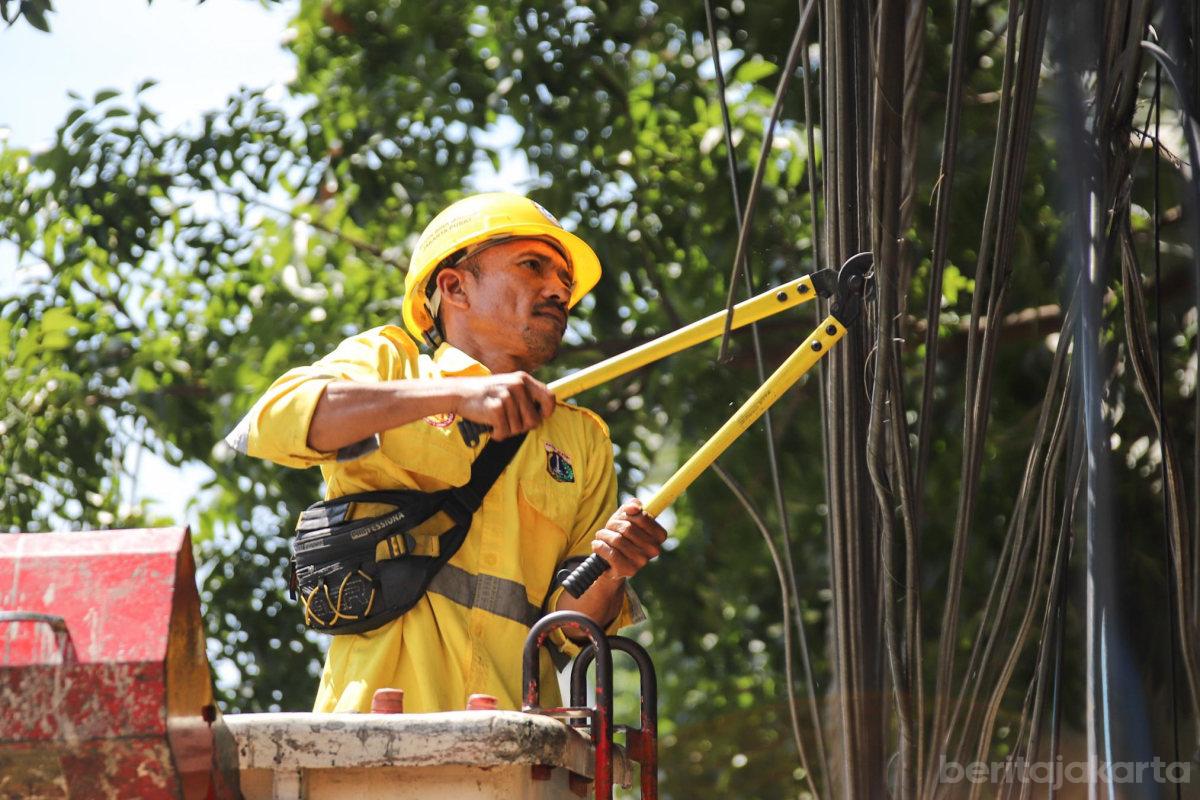
As Jakarta approaches its fifth century, the Jakarta Provincial Government launched the 5M Movement to organize the chaotic aerial cables and improve the security and safety of road users.
We now have a regional regulation
The 5M movement includes using Integrated Utility Network Facilities (SJUT), carrying out independent relocation, tying up active aerial cables, cutting non-functioning cables, and raising dangling cables.
Jakarta City Council's Chairman of Commission D, Yuke Yurike is pushing for the initiative to become a concrete step to expedite the lowering of aerial cables underground. She believes that as a modern city, Jakarta needs an organized and uncluttered utility network.
"We now have a regional regulation. Only the gubernatorial regulation and its derivatives are currently being finalized. After that, there will be no excuse not to lower all cables underground," she said, Friday (9/18).
She assessed that the Jakarta Provincial Government cannot handle the cable restructuring alone. Therefore, the involvement of utility operators and the private sector through independent relocations needs to be strengthened to expedite the restructuring process.
Yuke stated that lowering PLN's power cables also presents its own challenges due to safety concerns. Furthermore, PLN is still conducting studies and tests to ensure the process of lowering the cables underground does not pose a risk of electrical induction.
"We hope PLN can find a solution soon. Once that's done, everything will be back on track," she added.
Yuke also requested that the SJUT construction be synergized with other utility projects to avoid recurring disruptions to the community. He stated that excavation work for the SJUT, water network, and other utilities must be carefully planned and coordinated.
Yuke hopes the planned SJUT construction can be completed this year. Starting in 2027, the scope of the project is expected to be expanded to include third parties if government budget constraints are limited.
She continued that the cable arrangement not only aims to create a neater and safer environment, but also has the potential to generate additional revenue for the region.
However, he reminded that the costs of arranging the utility network should not be passed on to the public through increased service rates.
"Don't let higher costs become an excuse for raising prices, whether it's internet or something else. It should really be limited," she emphasized.
![<?//= $potret[0]->photo_filename ?>](https://multimedia.beritajakarta.id/photo/potret-jakarta/2026/09/yqBuGsTR9JuKlCLLi655QMeeIgnne6mE.jpg)