Monday, August 31st 2026 Reporter: Aldi Geri Lumban Tobing Translator: 55 95
(Foto: Istimewa)
PT Transportasi Jakarta (Transjakarta) continues to reinforce its commitment to advancing both BRT and non-BRT services, broadening multimodal integration, and enhancing public accessibility.
This strategic initiative is aimed at delivering an urban transportation network that is increasingly seamless, reliable, safe, and environmentally sustainable.
This allows the public to enjoy a mode of transportation
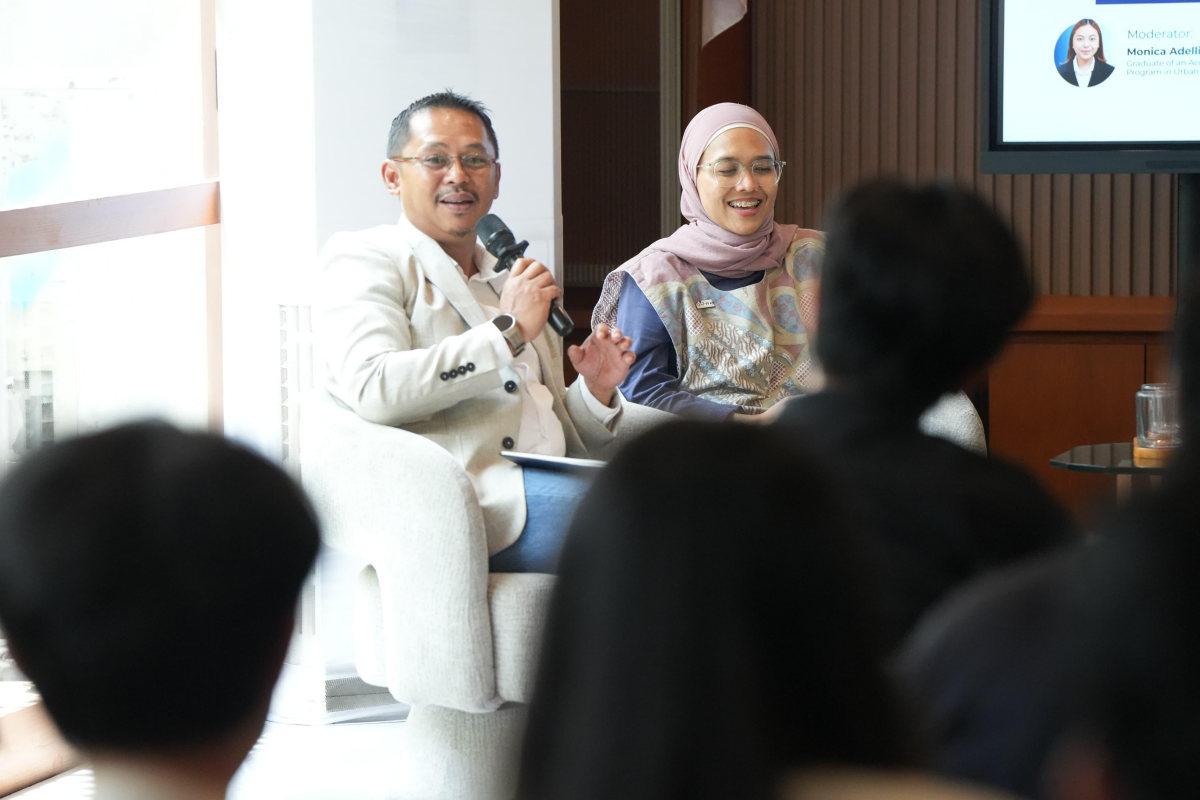
Transjakarta’s Operations and Safety Director, Mohamad Deddy Gamawan, stated that the development of public transport in Jakarta focuses not only on expanding its reach but also on inter-service connectivity to ensure seamless mobility for citizens.
He explained that Transjakarta is continuously striving to provide services that reach more areas while simplifying passenger journeys through intermodal integration.
"With an interconnected network, Transjakarta’s coverage area has now reached 92% of Jakarta. This allows the public to enjoy a mode of transportation that is more practical, comfortable, and efficient,” he expressed, Monday (8/31).
He explained that Transjakarta’s 240 routes—ranging from BRT and feeder lines to Transjabodetabek and specialized services—are designed to maximize first and last mile connectivity. This ensures a holistic travel experience for all passengers.
Physical integration is now strategically established at key transport hubs, including MRT Jakarta stations (Bundaran HI, ASEAN, Lebak Bulus) and LRT Jabodebek stations (Setiabudi, Rasuna Said, Cikoko, Cawang, Ciliwung, and Kuningan), creating a highly efficient multimodal system.
Beyond the physical infrastructure, commuters enjoy the advantage of a multi-modal fare cap, priced at just Rp 10,000 for a 180-minute journey. This makes cross-city travel both simple and cost-effective.
“Integration is more than just connecting routes; it is about facilitating seamless passenger transfers. Consequently, physical integration, route connectivity, and fare affordability are central to Transjakarta's strategic development goals,” he concluded.
Gamawan highlighted that alongside network integration, the company is moving toward a low-emission ecosystem through rapid fleet electrification. This aligns with Jakarta’s ambitious goal for a 50% pollution-free public transport system by 2027, and a full 100% transition by 2030.
With its latest sustainable expansion, Transjakarta’s electric fleet has now reached a significant milestone of 500 units.
“Our roadmap includes renewing our fleet, procuring new electric buses, and retrofitting older models. By 2030, our goal is to see 96% of our current operator contracts transformed into electric-powered services," he closed.
![<?//= $potret[0]->photo_filename ?>](https://multimedia.beritajakarta.id/photo/potret-jakarta/2026/08/ZkokFFBgJQ9kE9ldIasTGiLI8X42M00n.jpg)