
Thursday, August 20th 2026 Reporter: Fakhrizal Fakhri Translator: 138 126
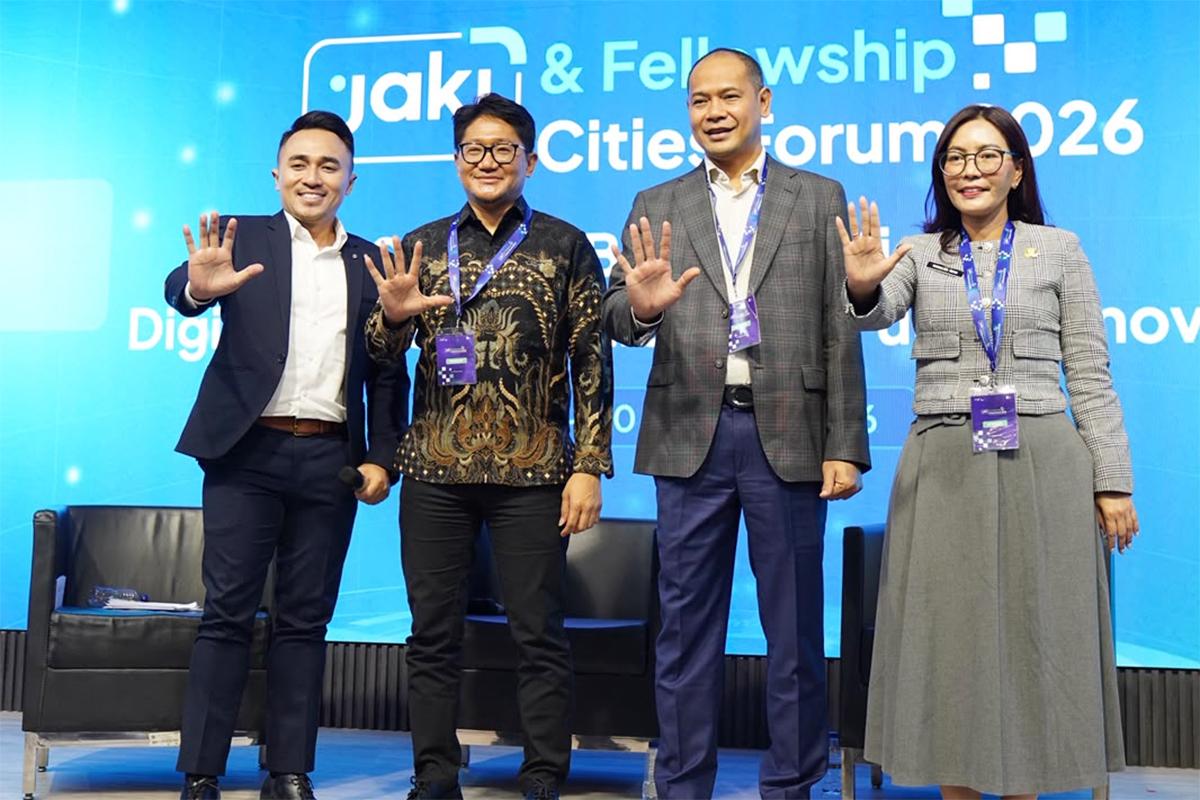
(Foto: Istimewa)
Digital transformation is an important engine for driving Indonesia's economic growth toward its 8 percent target, according to Sonny Hendra Sudaryana, Director of Digital Ecosystem Development at the Ministry of Communication and Digital Affairs (Komdigi).
Indonesia's 8 percent growth cannot be created in Jakarta alone
Sonny said digital transformation cannot be achieved simply by building infrastructure and connectivity. Technology must create economic value while delivering tangible benefits to communities across the country.
"Indonesia is currently experiencing a demographic bonus, with 50 percent of the population under 30 and 70 percent of working age," Sonny said at the JAKI & Fellowship Cities Forum (JFCF) 2026 at Jakarta City Hall on Thursday (8/20).
He explained that Indonesia should make the most of this demographic bonus in the coming years, as the country's population is projected to begin entering an aging phase in 2035.
The government therefore needs to ensure the demographic bonus doesn't remain merely a potential advantage, but becomes a force for creating jobs and driving economic growth in the regions.
Sonny said the Komdigi is promoting digital transformation through three main focuses: Connected, Growing, and Protected. Connected aims to provide wider access to quality and affordable connectivity, while Growing focuses on turning connectivity into greater economic benefits and Protected on safeguarding the public, particularly children, from digital risks.
He stressed that the development of the digital ecosystem must also ensure that the economic value generated by technology is not enjoyed solely by global companies. Indonesia needs to strengthen its ability to create and retain economic value domestically.
"The first is value retention, or how we can keep that value here rather than allowing too much of it to leave Indonesia and simply treating us as a market. The second is spillover to the real economy," he noted.
According to him, digitalization must have a direct impact on the real economy, such as by increasing the productivity of farmers, fish farmers, and MSMEs. The government also needs to become an early adopter of innovation so that digital products and services developed by the private sector and communities have room to grow.
At the same time, Sonny highlighted several challenges in technological development, particularly artificial intelligence (AI). These include the potential digital divide between urban and rural areas, data breach risks, and the growing use of AI in fraudulent activities.
To bridge the digital divide, Komdigi is developing the Garuda Spark Innovation Hub in 20 cities to expand access to knowledge, networks, and digital skills beyond Jakarta.
Sonny also said local governments need to change their approach to smart city development. Governments can no longer act merely as administrators, but must also serve as facilitators, collaborators, and orchestrators that bring together the government, communities, businesses, and other stakeholders to address shared challenges.
"Indonesia's 8 percent growth cannot be created in Jakarta alone. Every region must contribute to GDP," Sonny asserted.
He expressed hope that collaboration among regions and a stronger digital ecosystem would broaden the sources of economic growth. This, he said, would enable the 8 percent economic growth target to be achieved through contributions from regions across Indonesia.
"As Bung Hatta once said, 'Indonesia cannot become great by lighting a torch in Jakarta, but by lighting small candles across the regions.' We hope that through joint initiatives and our role as orchestrators, we can share the same vision and achieve 8 percent economic growth," he said.
![<?//= $potret[0]->photo_filename ?>](https://multimedia.beritajakarta.id/photo/potret-jakarta/2026/08/NtjKWEsFcKfg60KvR9J3FKL5Ptbl0C7x.jpg)
