Tuesday, August 4th 2026 Reporter: Folmer Translator: Maria Inggita 133
(Foto: Folmer)
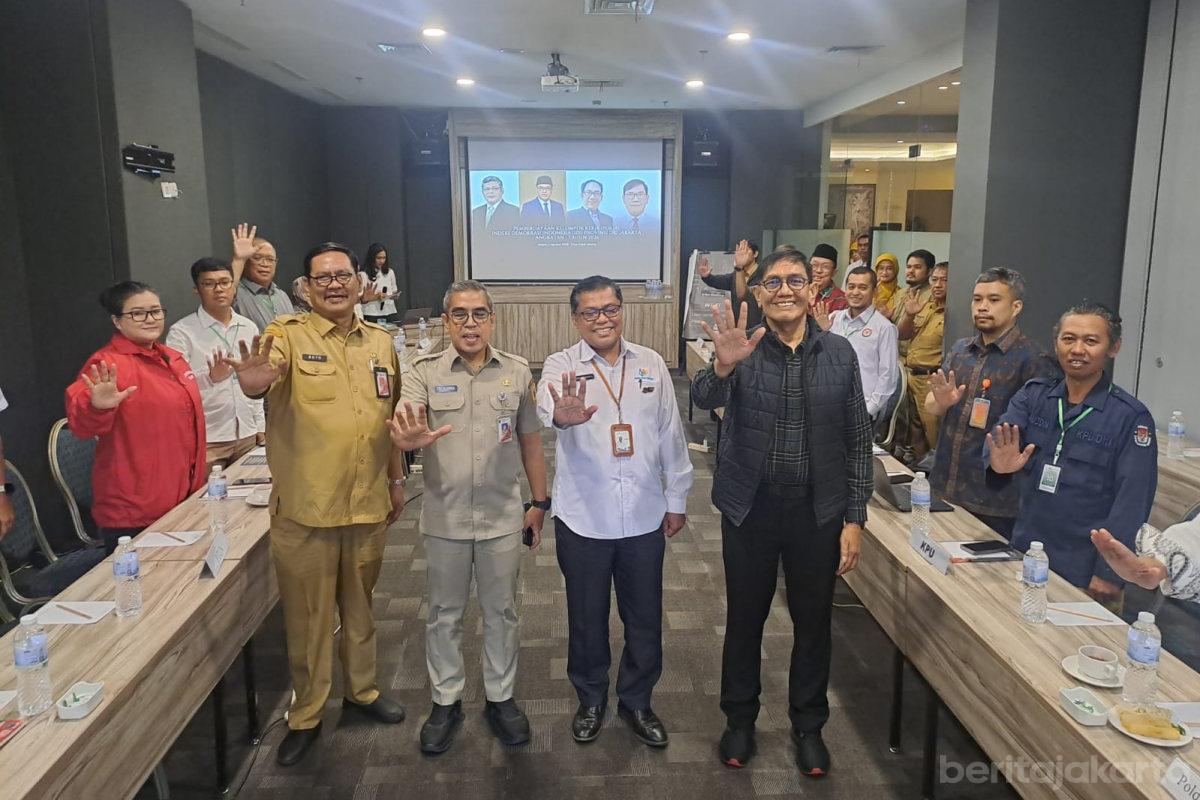
The Jakarta Provincial Government, through the National Unity and Politics Agency (Kesbangpol), is preparing the 2026 Indonesia Democracy Index (IDI) assessment through a transparent process involving multiple stakeholders.
Jakarta recorded the highest IDI score nationwide for five consecutive years
Jakarta Kesbangpol Politics and Democracy Division Head Tri Kurnia Frihatino said the agency is working with Statistics Indonesia (BPS), educational institutions, research organizations, and civil society groups to prepare the 2026 IDI assessment. The collaborative approach is intended to ensure the resulting data can serve as a strong basis for policymaking.
Tri explained that the agency held a Focus Group Discussion (FGD) on Tuesday (8/4) as a follow-up to Jakarta Governor Decree No. 540/2025 on the IDI Working Group for the 2025–2029 period.
"IDI is a jointly agreed tool used to measure the level of democratic development across Indonesia's provinces based on the implementation and progress of various aspects and indicators drawn from data and events occurring within society," Tri said.
He noted that Jakarta recorded the highest IDI score nationwide for five consecutive years, from 2017 to 2021, with scores ranging from 82.08 to 84.73.
However, he emphasized that Jakarta's score remains in the high category and continues to exceed the national average.
"We encourage participants to actively contribute information and data to enrich the FGD process, particularly in evaluating the 2025 IDI assessment and preparing the 2026 assessment, for which we have set a target score of 85.78," he said.
Meanwhile, Jakarta Statistics Indonesia (BPS) Head Kadarmanto outlined several measures to improve the city's IDI score, including strengthening public access to information and reviewing Governor Regulation No. 25/2016 on regulating public demonstrations in public spaces.
He also called for stronger democracy education targeting various groups, including students, local communities, first-time voters, and community organizations.
"The goal is to ensure that every group understands its rights, responsibilities, and role in democratic life so that the quality of democracy continues to improve," he asserted.
![<?//= $potret[0]->photo_filename ?>](https://multimedia.beritajakarta.id/photo/potret-jakarta/2026/08/x5cQNMM5ydVu1XS9hjX4EcHHmSHQakip.jpg)