Thursday, July 23rd 2026 Reporter: Dessy Suciati Translator: Rizky Mawardi 136
(Foto: Reza Pratama Putra)
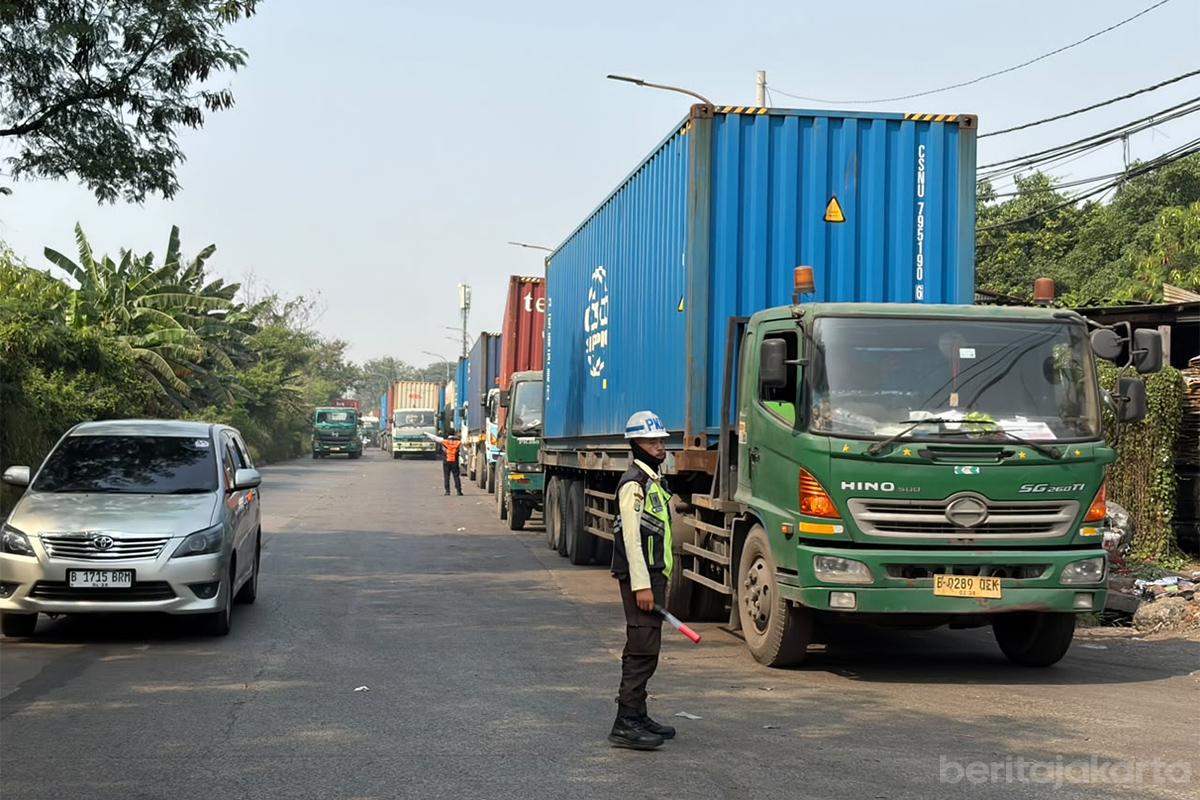
The Jakarta Provincial Government is moving quickly to address the long traffic jam problem in the Cakung-Cilincing area.
Jakarta Governor, Pramono Anung, said that the congestion was caused by the accumulation of containers at the depot due to the high volume of imported goods which was not comparable to exports.
imbalance between those entering and those leaving
"The congestion that occurs is caused by an imbalance between those entering and those leaving," said Pramono, Thursday (7/23).
According to Pramono, the decline in export activity has resulted in many empty containers, leading to a buildup of empty crates at container depots. This situation has caused trucks to queue and clog up the roads, resulting in long traffic jams.
Therefore, Pramono admitted that he had instructed the Head of the Transportation Agency, Budi Awaludin, to prohibit empty container trucks from parking on the side of the road.
The Jakarta Provincial Government has also prepared the Tanah Merdeka Terminal as a temporary buffer zone for trucks and containers. This will help ease congestion along the road.
"There's no more on-street parking. That's what causes the incredible traffic jams. So we're using Tanah Merdeka Terminal as a buffer zone," added Pramono.
Moreover, the Jakarta Provincial Government also granted a discretionary exemption from entry fees from July 22 to August 5, 2026. Pramono said that the Tanah Merdeka Terminal can accommodate up to 200 container trucks.
Vehicles can wait inside the terminal area for free and no longer have to queue and fill up the road.
"We ask anyone who has such activities, please take advantage of the discretion issued by the Governor for parking in Tanah Merah," he stated.
As for information, in addition to preparing the Tanah Merdeka Terminal, the Jakarta Provincial Government is also preparing several measures to address the congestion problem. One of these is collaborating with Pelindo to optimize container storage capacity within the port area.
![<?//= $potret[0]->photo_filename ?>](https://multimedia.beritajakarta.id/photo/potret-jakarta/2026/07/D8e49EAHSfUgTPT9jxqpSQyh1YcJM69z.jpg)