Monday, July 6th 2026 Reporter: Nurito Translator: Maria Inggita 68
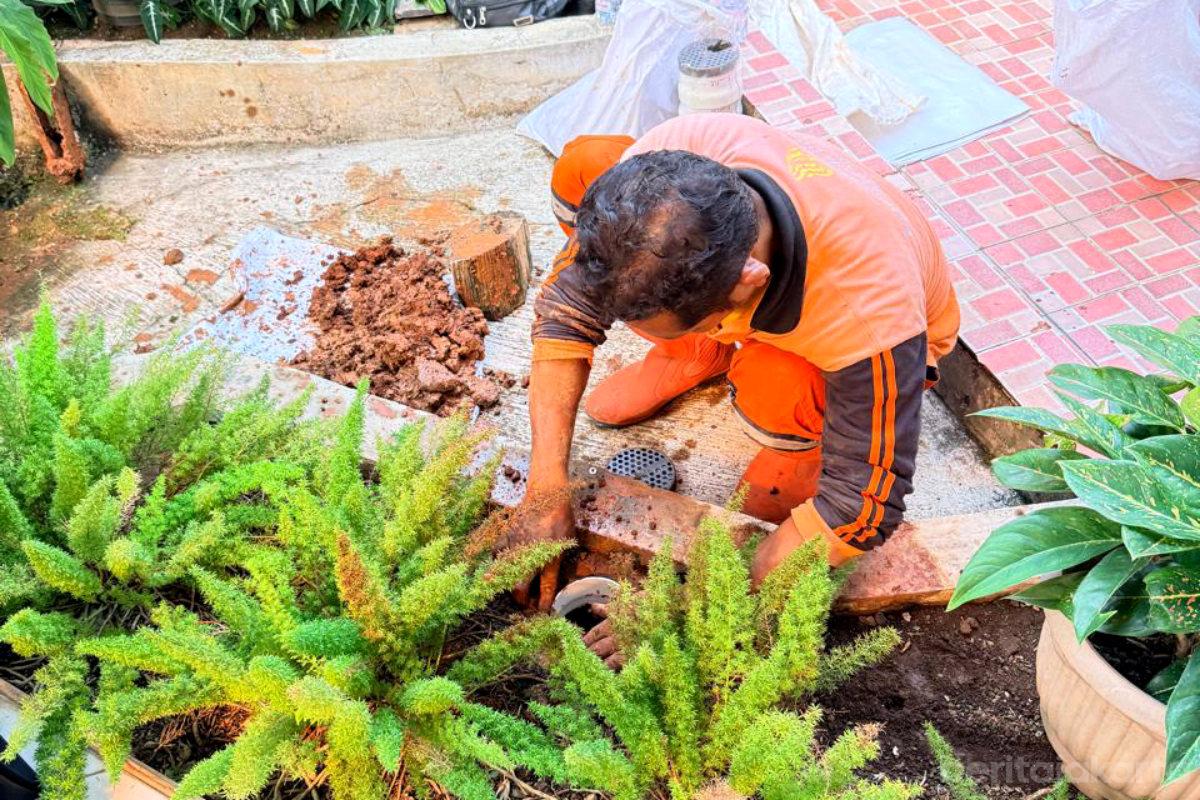
(Foto: Nurito)
Residents of RW 10 in Pondok Bambu Urban Village, Duren Sawit Sub-district, East Jakarta, are stepping up waste management from the source through the One Household, One Biopore Hole program.
Each household will have one to three biopore holes
Implemented in collaboration with Public Infrastructure and Facilities Handling (PPSU) personnel, the initiative aims to process household organic waste and reduce the amount of waste sent to the Bantar Gebang Integrated Waste Processing Site (TPST).
Pondok Bambu Urban Village Community Deliberation Council (LMK) Vice Chair Heru Irianto Basuki said RW 10 has around 840 households, with an initial target of building 70 biopore holes across RT 04, RT 05, RT 06, RT 07, and RT 09 as pilot locations.
"Each household will have one to three biopore holes, depending on the available space. We want to encourage residents to manage their organic waste from home," he said on Monday (7/6).
Heru explained that around 15 PPSU personnel are involved in constructing the biopore holes by digging holes about 1.5 meters deep and 40 centimeters in diameter.
"The holes are fitted with four-inch PVC pipes to hold organic waste. In some locations, residents also use waste bins or empty water gallon containers in their gardens," he noted.
He added that around 40 of the targeted 70 biopore holes have been completed and expressed confidence that the remaining holes will be finished within the next week.
RW 10 TP PKK Chair Sri Roes Redjeki has also supported the initiative by installing two biopore holes in her home yard.
She has also been encouraging women in the neighborhood to use biopore holes to process organic waste into compost.
"We continue to educate residents to dispose of kitchen waste in biopore holes so it can be turned into useful compost," she said.
Meanwhile, Pondok Bambu Urban Village Head Ateng Surahman said biopore holes in public spaces, such as parks, are made using waste bins provided by the East Jakarta Environment Sub-agency or empty water gallon containers.
"We hope this program will serve as a model for community-based waste management that can reduce household waste from the source," he emphasized.
![<?//= $potret[0]->photo_filename ?>](https://multimedia.beritajakarta.id/photo/potret-jakarta/2026/07/3Y41csSPoS81dbmFkps6Lpf6puIPgvzr.jpg)