Saturday, June 6th 2026 Reporter: Budhi Firmansyah Surapati Translator: Maria Inggita 127
(Foto: Budhi Firmansyah Surapati)
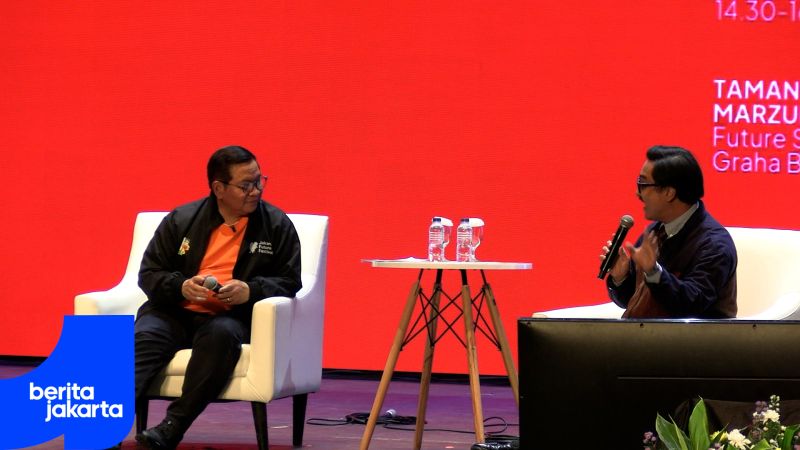
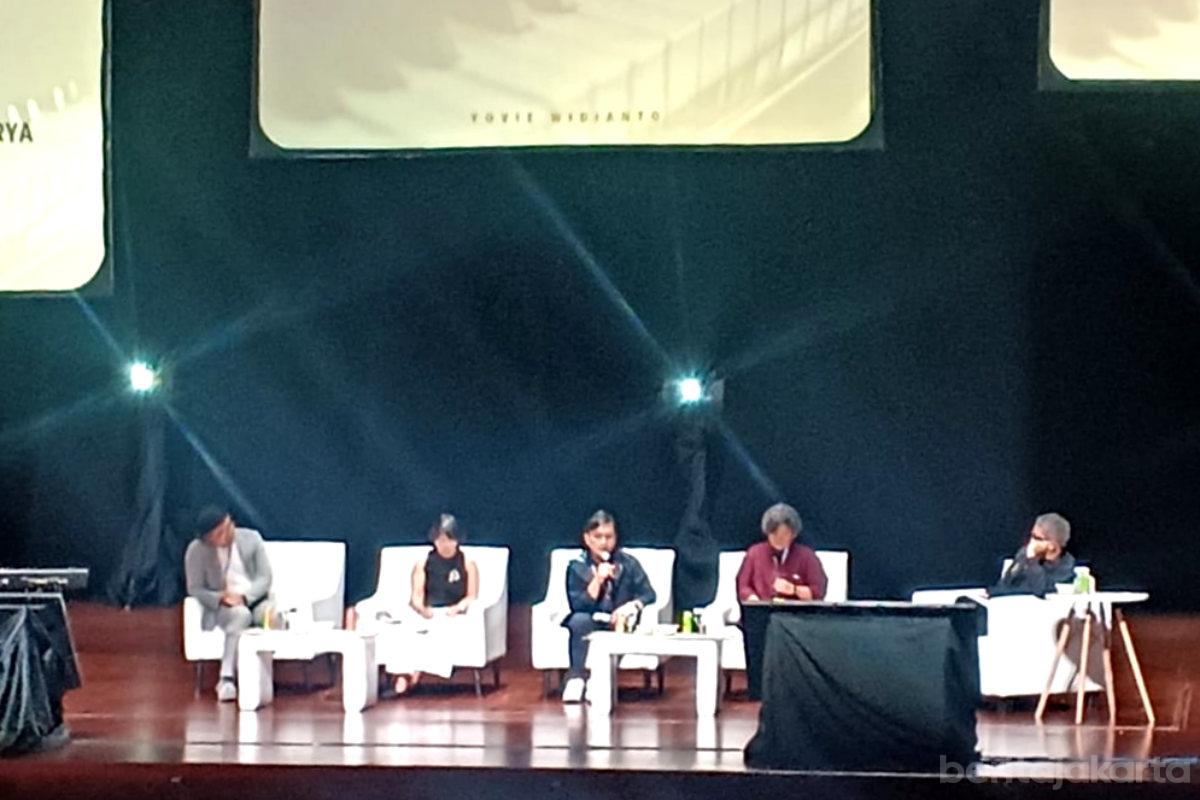
The Jakarta Future Festival (JFF) 2026 held an Urban Talks session on "Accelerating Local Creativity to Create Global Products" at the Grand Theater of Taman Ismail Marzuki in Cikini, Menteng, Central Jakarta, on Saturday (6/6).
The government must be able to create incentives
The event featured speakers including Presidential Special Staff for Creative Economy, Yovi Widianto; Jakarta Fashion Week (JFW) Founder, Svida Alisjahbana; music and cultural practitioner, Ki Ageng Bondan; and creative economy academic, Dwi Sita Larasati. The discussion focused on strengthening the creative economy ecosystem to support Jakarta's transformation into a global city.
Yovi said the government continues to support the growth of the creative economy not only through various events but also through policy support, including royalty tax reductions to around 1.5 percent.
"The government must be able to create incentives because that represents a concrete contribution to the creative economy," he asserted.
Yovi said Jakarta has been an open and globally connected city for nearly 500 years. As a melting pot that has long attracted artists from across the archipelago as well as visitors from around the world, the city already has a strong foundation for developing its creative industries on the global stage.
He believes Jakarta's artists are ready to compete on the international stage and that the government's role is now to help accelerate that process.
"Many local artists have independently produced works that have successfully entered global markets," he said.
Yovi also encouraged artists not to be concerned about the rise of artificial intelligence, saying the technology should instead be viewed as a tool for growth and innovation.
"Many artists achieved success even when working independently. Imagine what can be accomplished now with government support," he added.
Meanwhile, Jakarta Fashion Week founder Svida Alisjahbana emphasized the importance of creating opportunities for young people to develop their talents.
"For 19 years, Jakarta Fashion Week has provided opportunities for emerging designers," she said.
Svida noted that fashion, as a creative economy product, should be viewed not only as a commodity but also as a medium for expressing identity. She pointed to global cities such as Paris, Milan, and New York City, where strong fashion identities have helped reinforce each city's global brand.
"With its many strengths and opportunities, I am optimistic that Jakarta can become the fashion capital of Southeast Asia. To achieve that, support is needed from all stakeholders, including industry players, the media, and the government," she stressed.
As an example of government support, Svida highlighted two shopping destinations dedicated to the fashion industry, Thamrin City and Pasar Mayestik. However, she noted that many businesses operating in Pasar Mayestik remain small-scale fashion enterprises.
"It would be beneficial if businesses in Mayestik could receive more training and support. That way, Jakarta could also offer a more complete fashion shopping experience," she explained.
![<?//= $potret[0]->photo_filename ?>](https://multimedia.beritajakarta.id/photo/potret-jakarta/2026/06/CMrmZITl4q1u5ESccT338EjEPy6hwMGd.jpg)