Thursday, June 4th 2026 Reporter: Tiyo Surya Sakti Translator: Rizky Mawardi 73
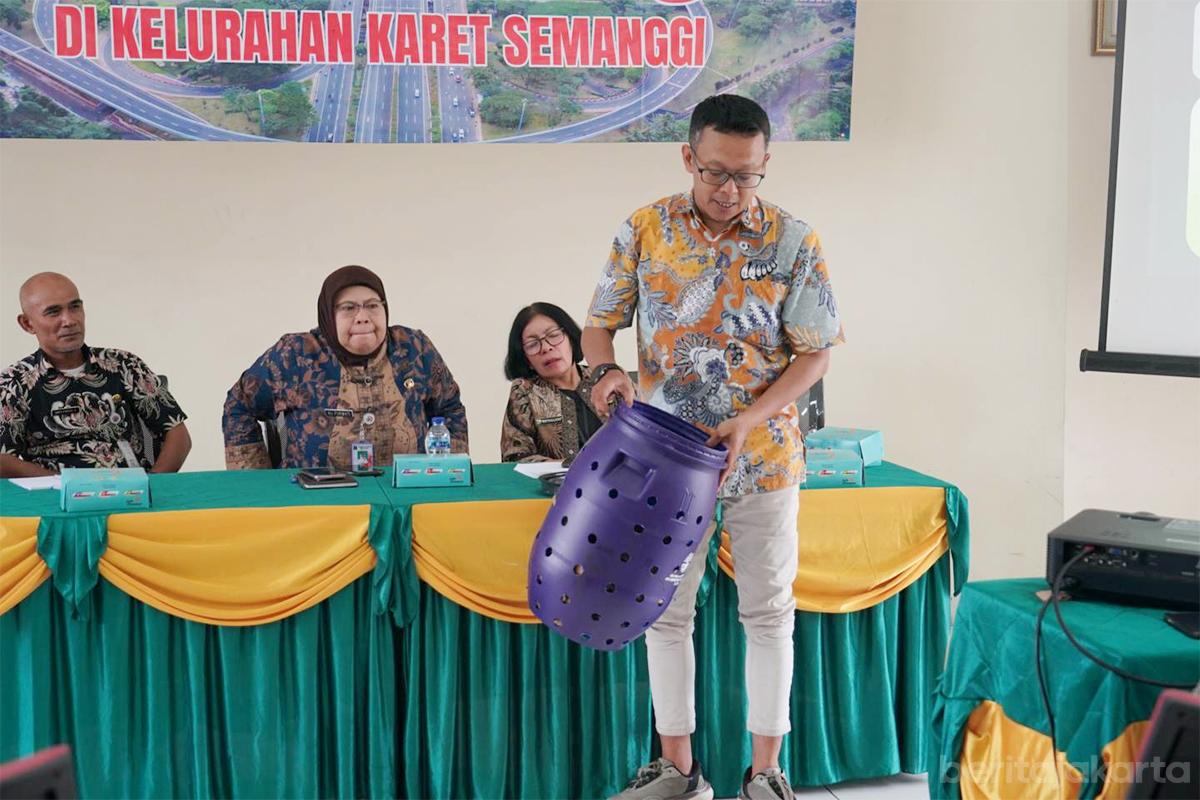
(Foto: Tiyo Surya Sakti)
A total of 30 participants attended a socialization on waste sorting and management in Karet Semanggi Urban Village Office, Setiabudi District, South Jakarta.
Head of Karet Semanggi Urban Village, Purwanti said this socialization is part of an effort to reduce waste volume ahead of the implementation of stricter waste management policies starting August 1, 2026. Under this policy, the Bantar Gebang Integrated Waste Processing Site (TPST) will only accept residual waste.
understand the types of waste
"Through this socialization, the public is expected to understand the types of waste, especially residual waste, which will later become the only type of waste that can be sent to the Bantar Gebang TPST," she said, Thursday (6/4).
She added that the waste problem is still a concern in her area, especially in RW 03. Based on reports received through the JAKI application, residents often complain about delays in waste collection.
"The waste problem is not only the responsibility of the collectors, but is a shared responsibility as waste producers," she added.
Purwanti explained that one of the obstacles faced in the field was the condition of a number of motorized carts which were damaged, thus hampering the waste transportation process.
The urban village encourages environmental administrators to cooperate with local business actors through Corporate Social Responsibility (CSR) programs to help procure waste collection vehicles.
"The main solution that must be done is to manage waste from home," she said.
Meanwhile, Setiabudi District's Environmental Unit Staff, Atin Supriyatna stated the Bantar Gebang TPST's capacity is currently increasingly limited. Previously, it could accommodate around 30 trucks of garbage per day, but now it can only accommodate around 10 trucks.
"I ask residents to sort residual waste, such as disposable diapers, tissues, sanitary napkins, and styrofoam, from other types of waste because they cannot be recycled," he stated.
Meanwhile, waste that still has economic value, such as paper, cardboard, plastic bottles and beverage cans, can be sorted and deposited at the waste bank.
"We are ready to provide direct assistance and education to residents regarding simple and easy-to-implement waste management methods," he admitted.
![<?//= $potret[0]->photo_filename ?>](https://multimedia.beritajakarta.id/photo/potret-jakarta/2026/06/JSeySADIF8UojfTtdWb3KNZQyv1TdhwT.jpg)