Tuesday, May 26th 2026 Reporter: Anita Karyati Translator: Nugroho Adibrata 87
(Foto: Anita Karyati)
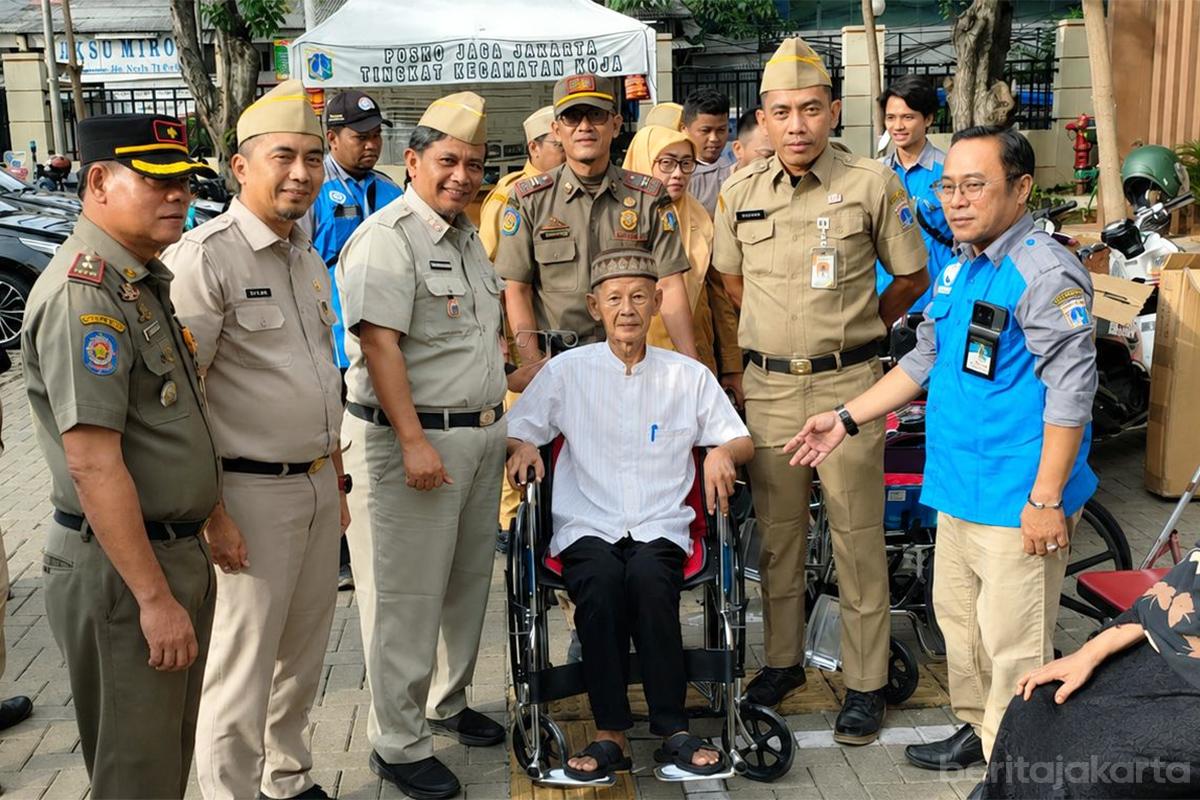
The North Jakarta Social Sub-agency has distributed 70 wheelchairs to persons with disabilities and seniors in Koja Sub-district.
North Jakarta Social Protection, Security, and Rehabilitation Section Head, Agus Kurniawan, stated that the assistance was provided as a form of government concern to support the mobility of residents in need.
Our personnel have been delivering the assistance
"The first phase of this wheelchair distribution totals 70 units for 70 beneficiaries across six urban villages in Koja," he expressed, Tuesday (5/26).
According to him, the aid was channeled through recommendations from the sub-district social task force, legislative members, and community groups, following a verification process by staff.
The breakdown of recipients is as follows: 18 residents in Tugu Utara, eight in Tugu Selaran, 16 in Lagoa, seven in Rawa Badak Utara, 20 in Rawa Badak Selatan, and one in Koja.
"Our personnel have been delivering the assistance directly to the beneficiaries since yesterday," he added.
He hopes the aid will make daily life easier for the beneficiaries and help them become more self-reliant.
"We want these devices to be properly cared for so they last longer and can truly benefit the residents in staying productive," he noted.
At the same time, Koja Sub-district Secretary, Adi Jaya Gumelar commended the North Jakarta Social Sub-agency for its prompt action.
He emphasized that collaboration between the district and the sub-agency is essential for effective social service delivery.
"For those with limited mobility, these wheelchairs are not just tools—they represent hope, enabling them to remain engaged with the community and conduct their daily routines," he noted.
He called on urban village heads and neighborhood leaders (RT/RW) to continue identifying residents in need of similar support who have yet to be served.
"I hope the aid quota will continue to grow, ensuring that no resident is left with limited mobility because they lack the necessary assistive equipment," he added.
![<?//= $potret[0]->photo_filename ?>](https://multimedia.beritajakarta.id/photo/potret-jakarta/2026/05/eXa7YfkIc6ZWF9M5btaj3zvtvoeOe4g5.jpg)