Friday, May 22nd 2026 Reporter: Aldi Geri Lumban Tobing Translator: Nugroho Adibrata 264
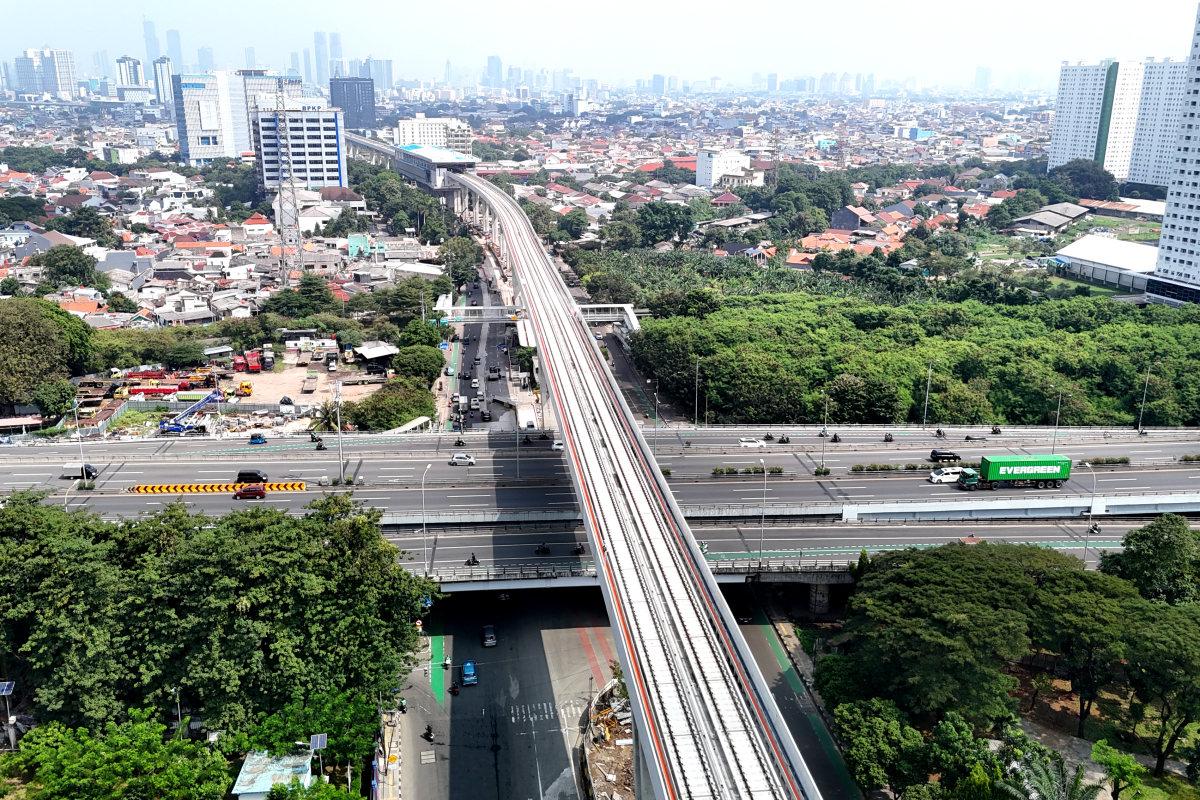
(Foto: Istimewa)
PT Jakarta Propertindo (Jakpro) has expressed its full support for the integrated public transportation development initiated by Governor Pramono Anung. This initiative aims to transform Jakarta into a modern, connected, and sustainable global city.
In support of this vision, the Jakarta government plans to extend the LRT Jakarta construction from Manggarai to Dukuh Atas. This extension is a key part of strengthening an interconnected public transport system that links various regions across the city.
To switch between transportation modes quickly and comfortably
PT Jakpro President Director, Iwan Takwin, stated that the development of the Jakarta LRT is not merely about building new transit lines, but is an essential component in forming Jakarta's future urban mobility ecosystem.
“The core concept of this master plan is to integrate transportation with urban areas through a Transit-Oriented Development (TOD) approach. Consequently, the LRT route is directed toward strategic hubs such as Manggarai and Dukuh Atas, allowing the public to switch between transportation modes quickly and comfortably,” he expressed, Friday (5/22).
Iwan explained that the LRT Jakarta master plan was designed with an integration-first approach, connecting with Jakarta's primary public transport modes, including the MRT Jakarta, Transjakarta, KRL Commuter Line, and Airport Rail Link.
The Manggarai and Dukuh Atas corridors serve as the main nodes in this development due to their strategic roles as meeting points for commuters from Jakarta and the Greater Jakarta (Jakarta, Bogor, Depok, Tangerang, Bekasi) metropolitan area.
He emphasized that strengthening public transport connectivity will serve as a vital foundation for more efficient, modern, and sustainable urban mobility in the capital. Beyond improving mobility, the expansion of the LRT network is expected to generate a significant multiplier effect on the city's economic growth.
The presence of LRT stations is projected to create new centers of economic activity through increased public movement and the development of transit-based areas.
“Each station will serve as a catalyst for new economic growth. Increased public activity will open up business opportunities, drive the local economy, and provide a direct impact on the welfare of residents living along the transport corridors,” he explained.
Jakpro is also optimistic that bolstering public transportation will encourage a shift from private vehicle use to mass transit. This shift is expected to contribute to reducing traffic congestion and lowering carbon emissions, supporting the "Jakarta Net Zero Emission" target.
“Currently, the construction of Jakarta LRT Phase 1B (Velodrome-Manggarai route) continues to show positive progress and is targeted for operation soon to support more efficient and integrated mobility for the people of Jakarta,” he added.
Previously, Governor Pram stated that the decision to extend the LRT route to Dukuh Atas was made after considering various inputs and the Jakarta government's fiscal capacity.
“For the LRT, the decision is to extend from Manggarai to Dukuh Atas, completing the single line from Velodrome all the way to Dukuh Atas,” the Governor said.
He also emphasized that the expansion of the LRT Jakarta network will continue toward northern areas once the city-center connectivity is finalized. Future plans include extensions to Jakarta International Stadium (JIS), Ancol, Pantai Indah Kapuk (PIK) 2, and Soekarno-Hatta International Airport, ultimately forming an integrated transport loop system for Jakarta.
![<?//= $potret[0]->photo_filename ?>](https://multimedia.beritajakarta.id/photo/potret-jakarta/2026/05/7PHRql87cKfbHqj1rO7enTGTc3u52qMX.jpg)