Thursday, May 7th 2026 Reporter: Aldi Geri Lumban Tobing Translator: Nugroho Adibrata 222
(Foto: Doc)
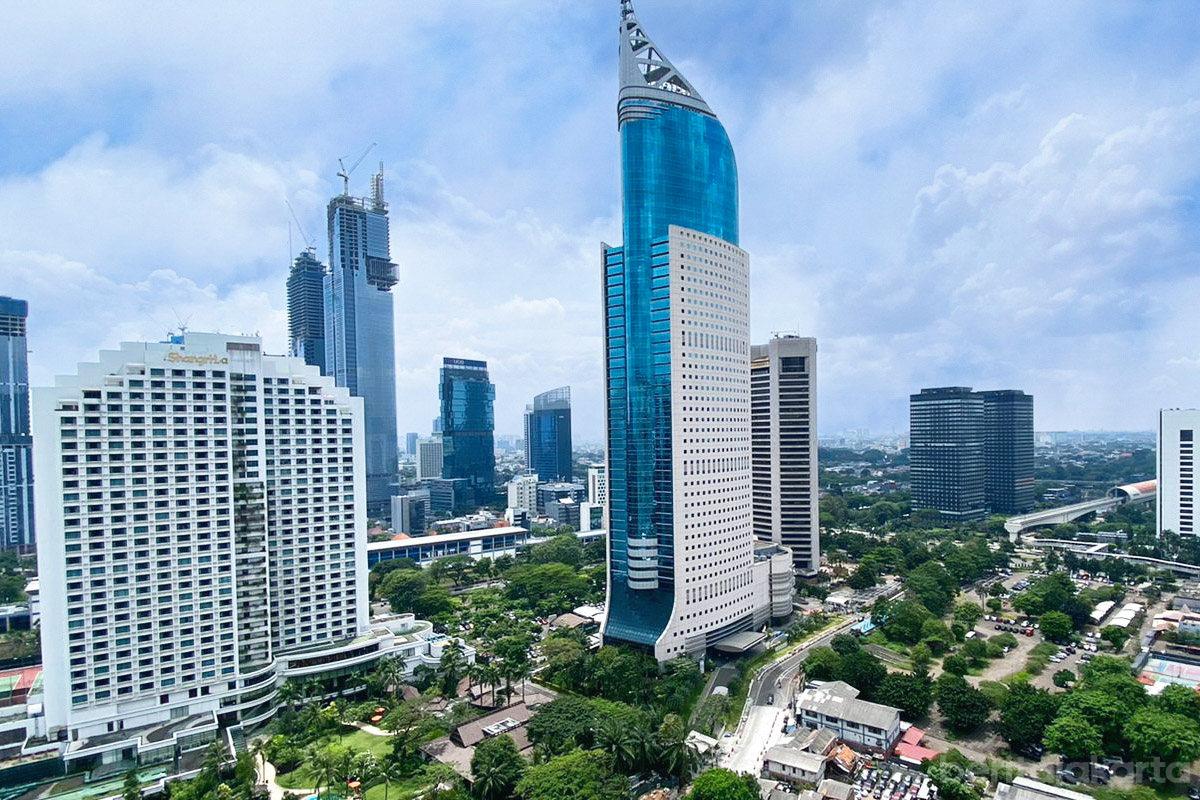
Statistics Indonesia (BPS) reported that Jakarta’s economy maintained robust growth of 5.59% year-on-year (y-o-y) in the first quarter of 2026, moving in tandem with the national economic growth recorded at 5.61% (y-o-y).
Accounting for a 16.67% share of the national economy, Jakarta remains the country’s primary economic engine. This positive performance was underpinned by solid domestic demand, sustained investment growth, and the strong performance of key business sectors, particularly Trade, Information and Communication, and Accommodation and Food & Beverage.
Jakarta remains the country’s primary economic engine
In response, the Bank Indonesia Representative Office for Jakarta will continue to strengthen synergies with the Jakarta government and relevant stakeholders to maintain stability and accelerate economic growth amidst global economic volatility.
These efforts are implemented through anticipatory measures in inflation control via the Regional Inflation Control Team (TPID), the expansion of payment system digitalization, the strengthening of investment and productive sectors, as well as the development of new sources of growth based on the creative economy,” stated Bank Indonesia Representative Office for Jakarta Head, Iwan Setiawan, Thursday (5/7).
In this context, the Bank Indonesia is also fostering the creative economy by organizing the Jakarta Youth Film Festival (JYFF) 2026 as part of the Jakarta Economic Forum (JEF) and Jakarta Kreatif Festival (JKF) series.
“This initiative is expected to strengthen Jakarta’s creative economy ecosystem and support the realization of high, inclusive, and sustainable economic growth for Jakarta as a competitive global city,” he added.
According to the BPS report, from the demand side, household consumption grew by 5.72% (y-o-y), an increase from the 5.51% (y-o-y) recorded in the previous quarter. This surge in household consumption was driven by increased public spending during the "long festive season" of National Religious Holidays (HBKN)—namely Ramadan, Eid al-Fitr, Lunar New Year, and Nyepi—further supported by various major events.
Public purchasing power remained resilient, bolstered by the increase in the Jakarta Provincial Minimum Wage (UMP), the disbursement of Religious Holiday Allowances (THR), and various government incentives. Investment, or Gross Fixed Capital Formation (GFCF), also maintained positive growth of 4.71% (y-o-y), supported by the continuation of various multi-year strategic projects by both the government and the private sector.
Meanwhile, government consumption grew by 4.22% (y-o-y). Although positive, this was more moderate compared to the previous quarter’s 8.60% (y-o-y), consistent with the typical trend of limited regional budget realization at the beginning of the year.
On the external front, exports of goods and services saw high growth of 8.98% (y-o-y), up from 7.62% (y-o-y) in the previous quarter, indicating that Jakarta’s trade activities remain resilient despite global dynamics.
From the production side (Business Sectors), Jakarta's economy was primarily driven by the Wholesale and Retail Trade sector, which grew by 6.71% (y-o-y), up from 6.66% (y-o-y) in the previous quarter. This positive trend was influenced by rising consumption during the festive season.
In line with this, the Accommodation and Food & Beverage sector grew sharply by 10.84% (y-o-y), a significant increase from 8.40% (y-o-y) in the preceding quarter. Economic growth was further supported by the Information and Communication sector, which maintained strong growth of 6.33% (y-o-y), reflecting the high demand for digital services, communication, and app-based transactions in Jakarta as a central hub for business and services.
![<?//= $potret[0]->photo_filename ?>](https://multimedia.beritajakarta.id/photo/potret-jakarta/2026/05/wIvUM8arsK60SfyJtYDmd5uQ7O8Klusg.jpg)