Thursday, April 30th 2026 Reporter: Fakhrizal Fakhri Translator: Rizky Mawardi 129
(Foto: Nugroho Sejati)
Vice Chairman of Commission D of the Jakarta City Council, Muhammad Idris, delivered a number of recommendations in the discussion of the Accountability Statement Report (LKPJ) of the Governor of Jakarta for the 2025 Fiscal Year.
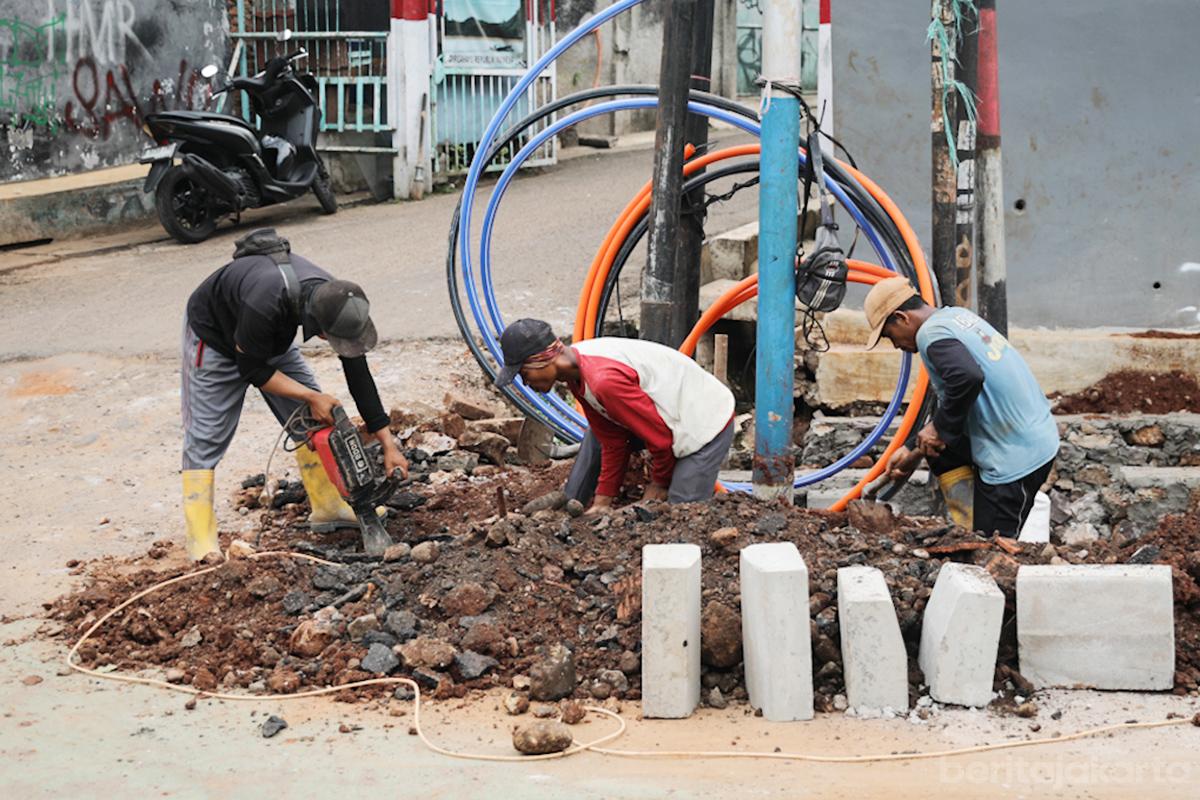
One of the recommendations raised at the forum was the importance of improving the quality of road infrastructure. Therefore, the Public Works Agency was asked to be more assertive in supervising utility excavation work carried out by third parties to prevent recurrent road damage.
ensure the safety and comfort of the public
In addition, the agency is also encouraged to seek alternative paving materials that are more resistant to extreme weather, as well as ensuring that sidewalks are interconnected and accessible to people with disabilities.
"It is necessary to ensure that all road infrastructure, bridges, bus stops, and public street lighting are in good condition and well maintained to ensure the safety and comfort of the public," he said, Thursday (4/30).
In the water management sector, the Water Resources (SDA) Agency was asked to evaluate the equitable distribution of infrastructure development. Optimizing dredging of water bodies was also deemed crucial to increasing storage capacity and reducing the risk of flooding in residential areas.
"Commission D encourages the construction of channels to have a direct impact on reducing flooding in residential areas," he added.
Meanwhile, the Public Works, Spatial Planning, and Land Agency (CKTRP) is being urged to take firm action against violations of spatial planning, including the practice of building without permits, or "building first, getting a permit later." Controlling buildings without a Certificate of Functional Suitability (SLF) is also considered crucial to ensure safety and prevent fire risks.
In the housing sector, Idris called for accelerated revitalization of uninhabitable apartments, such as the Marunda Flats. Construction quality monitoring also needs to be tightened, along with modernization of residential security systems.
Commission D also commended the responsive management of slum areas, particularly in the provision of basic infrastructure such as environmental drainage and bridges.
In terms of green open space, the City Parks and Forestry Agency is being asked to take more aggressive steps to increase the area of green open space (RTH) to reach the target of 30 percent. Preventing land conversion and providing burial grounds are also priorities.
Furthermore, the development of park activities that are accessible 24/7 in a safe and comfortable manner for the public is being encouraged.
"The agency is also advised to prepare processing facilities, such as shredding machines," he continued.
Idris reminded the public that there is a policy to stop the open dumping system at the Bantar Gebang TPST starting August 1, 2026. As a result, the Environmental Agency was asked to prepare an emergency waste management strategy, including optimizing the Rorotan RDF facility and controlling odor impacts.
"Education on waste sorting from the source needs to be strengthened through the role of waste banks and 3R TPS at the RW level," he added.
Commission D also emphasized the importance of following up on all City Council recommendations. Each regional apparatus was asked to compile a detailed recapitulation of the progress of implementing the recommendations, from those that have been followed up to those still in progress, as part of strengthening the oversight function.
"It is hoped that all these recommendations will improve the quality of development, strengthen environmental management, and have a real impact on the comfort and safety of Jakarta residents," he emphasized.
![<?//= $potret[0]->photo_filename ?>](https://multimedia.beritajakarta.id/photo/potret-jakarta/2026/04/gZY6YAa0RMisRSfVvSYF2WwXDVhubpy9.jpg)