Wednesday, April 29th 2026 Reporter: Fakhrizal Fakhri Translator: Maria Inggita 1570
(Foto: Ilustrasi)
Jakarta Council (DPRD) Commission D Chairperson, Yuke Yurike, has urged the optimization of waste bank programs as part of efforts to reduce waste volume in the city.
They should be further optimized
She said that waste bank programs at the community level have not yet been fully effective, despite their strong potential as a waste management solution.
"They should be further optimized. However, the Environment Agency and the Jakarta administration need to have accurate data on which areas have active and effective waste banks," she emphasized, on Wednesday (4/29).
According to her, waste bank performance needs to be mapped down to the urban village or neighborhood (RW) level to enable more targeted interventions, with underperforming areas supported by teams that have already succeeded.
"Underperforming areas can be supported by teams with proven results. The support must be measurable, including whether it leads to actual waste reduction after education," she said.
Yuke stressed the importance of direct public education on waste sorting, adding that assistance must be intensified, especially as the open dumping ban is set to take effect on August 1.
To accelerate efforts, she also encouraged the involvement of various stakeholders, including schools and universities, through fieldwork programs.
"Students can directly engage with communities to demonstrate waste sorting practices. Monitoring can involve neighborhood heads and PKK cadres," she added.
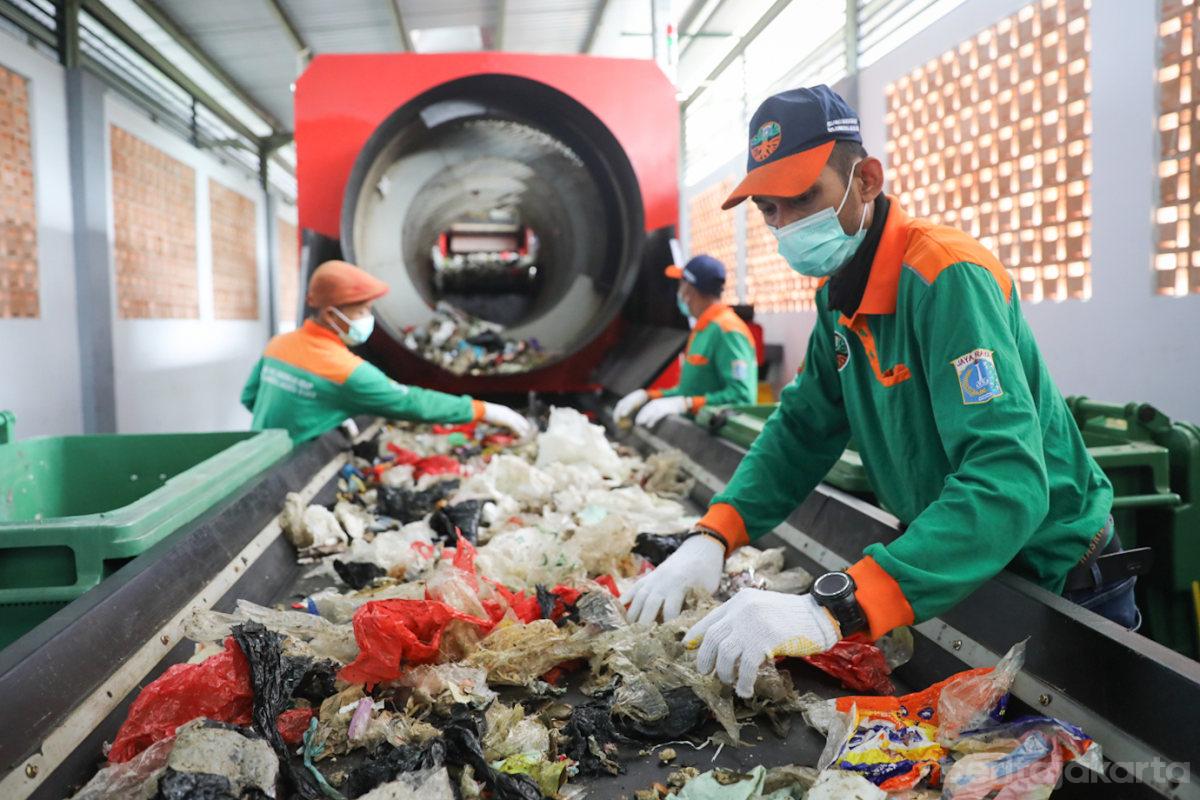
In addition to waste banks, Yuke also pushed for the development of Reduce, Reuse, Recycle (3R) waste processing facilities across the city.
She said 3R waste processing facilities play an important role not only in managing waste but also in educating the public. However, their implementation is still not optimal.
She noted that many 3R waste processing facilities continue to face challenges, including staffing shortages and underused equipment.
Furthermore, Commission D plans to conduct a comprehensive evaluation, including exploring potential collaboration with research institutions such as the National Research and Innovation Agency (BRIN) and universities.
"We want to find a more effective TPS 3R model, with simpler technology, less land requirement, and more affordable costs," she said.
She expressed hope that community-based waste management can be further strengthened, both through TPS 3R development and other small-scale processing models.
"The goal is to expand waste management to smaller-scale areas, not always relying on large-scale solutions,” she added.
![<?//= $potret[0]->photo_filename ?>](https://multimedia.beritajakarta.id/photo/potret-jakarta/2026/06/vqaNbGqJqK1EPt39cXiG636MD1OXji6u.jpg)