Friday, April 17th 2026 Reporter: Dessy Suciati Translator: Nugroho Adibrata 494
(Foto: Istimewa)
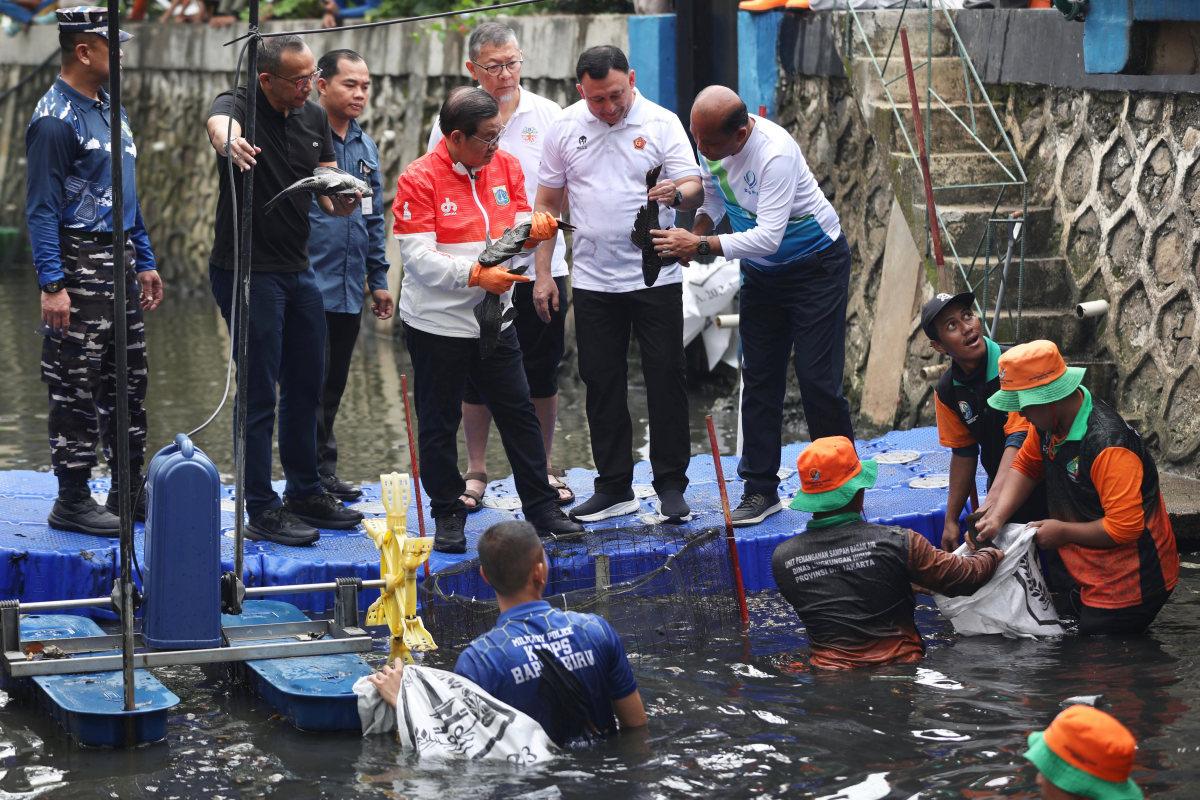
In a joint effort with the public, the Jakarta administration held a mass catching of 'sapu-sapu' fish simultaneously across five administrative regions. Jakarta Governor Pramono Anung was present at the event held in West Kelapa Gading, North Jakarta, this Friday (4/17).
The plecostomus population currently dominates Jakarta’s waters. This invasive species possesses high resilience and a very high reproductive rate, allowing it to survive even in harsh or limited environmental conditions.
This operation is being done simultaneously across five cities
"Today we are in North Jakarta. This operation is being done simultaneously across five cities in Jakarta to catch the sapu-sapu fish, as they are known to currently dominate Jakarta’s waters," he expressed.
Research from the Ministry of Maritime and Fisheries estimates that over 60 percent of the fish in Jakarta's waterways are 'sapu-sapu' fish. This species is harmful to other fish, upsets the ecological balance, and ruins natural habitats.
"The Jakarta administration is conducting this movement because the fish have overpopulated and are destroying our aquatic ecosystems, especially in the rivers and channels," he explained.
Further, this species has the potential to damage riverbank structures and embankments due to its habit of burrowing into the riverbeds and banks.
Pramono also noted that 'sapu-sapu' fish are unsafe for consumption as they contain high levels of hazardous chemical residues.
"On average, these fish have residue levels exceeding 0.3. This is extremely dangerous. It would be very hazardous if they were to be consumed," he explained.
Pramono expects the amount of 'sapu-sapu' fish caught today to reach over 200 kilograms. He emphasized, the removal program will become a regular fixture to manage the invasive species' population and preserve the city's rivers and canals.
"This will certainly be done routinely and on a larger scale. A symbolic gesture like this is simply not enough," he remarked.
Aquaculture Director General, Haeru Rahayu lauded the Jakarta administration's initiative to manage the invasive 'sapu-sapu' fish population.
He noted that the dominance of this species poses a significant threat, as they prey on other fish and degrade the aquatic environment.
"Why must we keep the sapu-sapu fish in check? It is because their population has grown to an overwhelming level," he explained.
He believes that conventional catching is still the most effective approach and hopes this initiative will protect the city's water ecosystems.
For the record, the catch will be managed following standard protocols. The fish will be put down and buried under hygienic conditions at specific sites.
This measure aims to prevent the fish from escaping back into the waterways or being sold on the market, while also allowing the remains to be repurposed as organic compost.
![<?//= $potret[0]->photo_filename ?>](https://multimedia.beritajakarta.id/photo/potret-jakarta/2026/06/CMrmZITl4q1u5ESccT338EjEPy6hwMGd.jpg)