Monday, February 9th 2026 Reporter: Dessy Suciati Translator: Nugroho Adibrata 644
(Foto: Reza Pratama Putra)
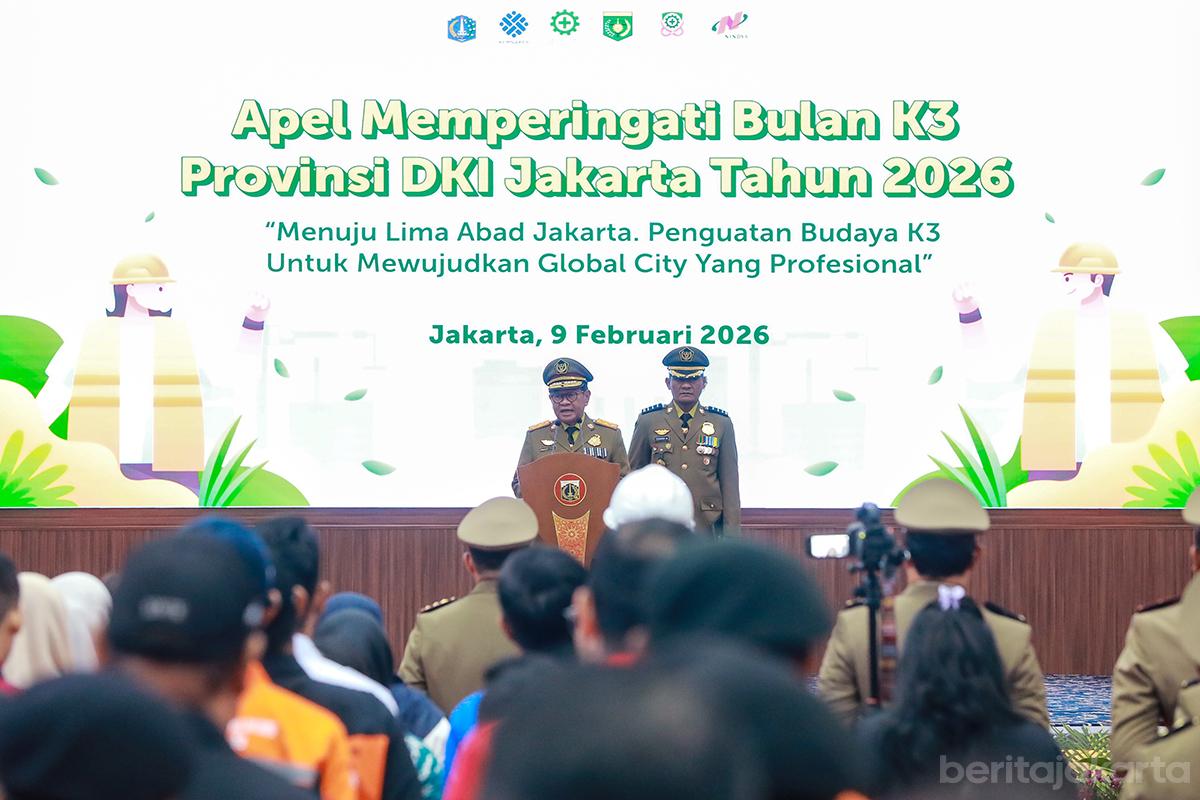
Governor Pramono Anung was on the front lines today to lead the National Occupational Safety and Health (K3) Month assembly in East Jakarta. Beyond the ceremony, he inspected health checks for local workers, emphasizing that their well-being is top of the agenda.
As the city prepares for its 500th milestone in 2027, Pramono made it clear that safety must be second nature for every worker and employer. He urged officials to stay the course in promoting higher safety standards across the capital.
Jakarta’s status as a global city hinges on the safety of its workers
"Jakarta’s status as a global city hinges on the safety of its workers. It is not just a requirement; it is a fundamental pillar of our quality of life," he added, Monday (2/9).
Regarding field supervision, he revealed that the Jakarta government is keeping the city’s skyscrapers under the microscope through rigorous audits. This two-pronged approach focuses on ensuring workplace safety aligns with the latest regulations and monitoring groundwater usage to nip land subsidence in the bud.
During the event, he delivered a message from the Manpower Minister, Yassierli, echoing the national theme: 'Building a Professional, Reliable, and Collaborative OSH Management Ecosystem'.
Pramono noted that this National OSH Month serves as a moment to take stock and double down on the commitment to protect Indonesia’s workforce while fostering a work environment that is safe, healthy, and productive.
With 146.54 million workers across the board—from construction and mining to the digital economy—Indonesia faces a wide spectrum of risks. He emphasized that OSH is the cornerstone of the economy; its effective management is a win-win, directly impacting worker morale, company productivity, and the nation’s overall competitive edge.
However, the working world is still grappling with structural bottlenecks. OSH services are currently not up to par, often hindered by a piecemeal approach to management. Furthermore, promotive and preventive measures are still playing second fiddle, and companies that proactively implement systematic OSH Management Systems (SMK3) remain few and far between.
To turn the tide, the Manpower Ministry overhauled the National OSH system in 2025, including a major digital facelift. The strategy now hinges on three main pillars: being professional, reliable, and collaborative.
"We are constantly fine-tuning regulations and standards, leveling up competencies through training, and ensuring that OSH culture is woven into the fabric of both labor unions and management," he concluded.
![<?//= $potret[0]->photo_filename ?>](https://multimedia.beritajakarta.id/photo/potret-jakarta/2026/06/zLHuD597IUTD0f8kc647mMqOzXA05Hrq.jpg)