Tuesday, June 9th 2026 Reporter: Budhi Firmansyah Surapati Translator: Maria Inggita 149
(Foto: Bilal Nugraha Ginanjar)
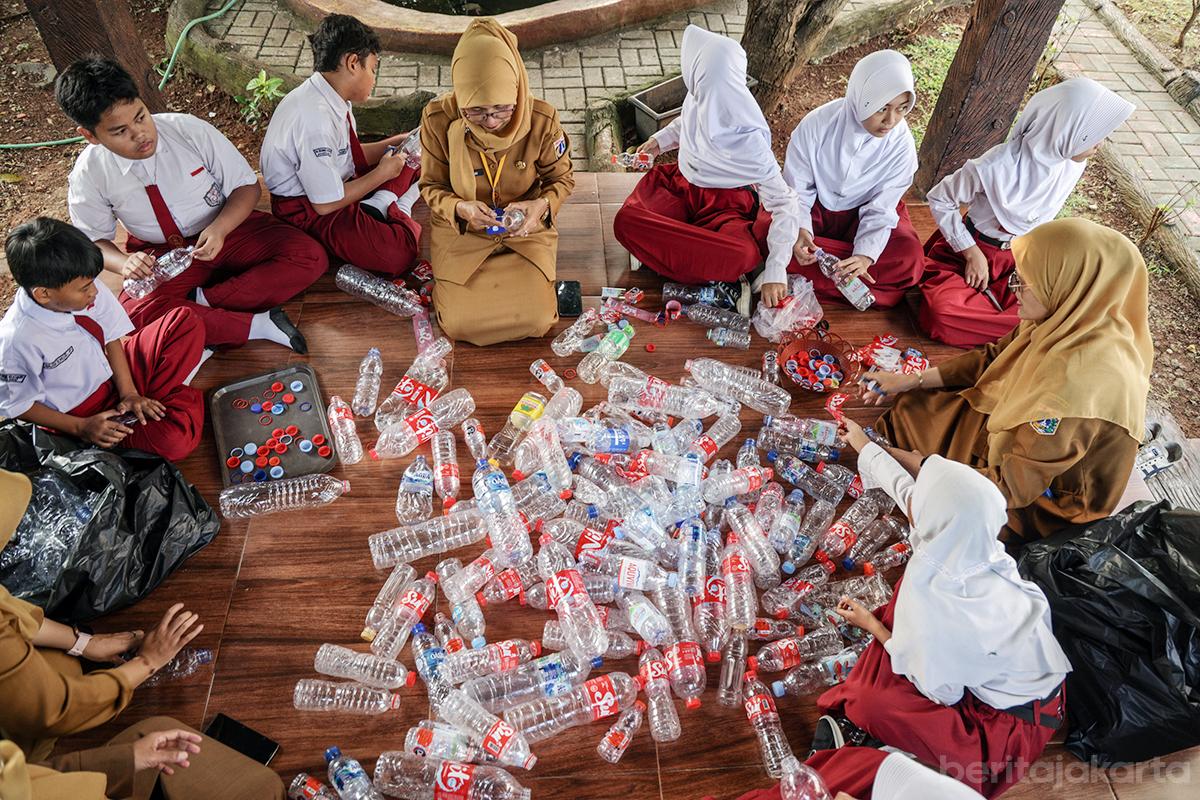
SDN Sukabumi Selatan 06 has begun implementing a zero-waste program by prohibiting littering and promoting waste management through waste bank and composting activities.
to educate students about waste management at the source
SDN Sukabumi Selatan 06 Principal Sunarsih said the program was introduced as part of the implementation of Jakarta Governor's Instruction No. 5/2026 on waste sorting and management at the source.
She added that the school has also incorporated the Adiwiyata environmental education program into its activities.
“Our school has effectively become a zero-waste school in its daily operations. This is in line with Governor's Instruction No. 5,” she said on Tuesday (6/9).
Sunarsih explained that under the program, students are required to bring reusable tumblers and lunch containers for their meals at school.
The school has also provided plates and glasses in the cafeteria to reduce the use of single-use food and beverage containers.
Every Tuesday, students are encouraged to bring recyclable materials such as plastic bottles and cardboard from home, which are then collected through the school's waste bank.
The school also organizes a used cooking oil donation program every Friday, encouraging students to bring used cooking oil from home for collection at school.
The school has also introduced organic waste processing using composters.
“Every two weeks, 10 students appointed as environmental ambassadors participate in composting activities alongside supervising teachers,” she added.
As a result, the school has processed organic waste into eco-enzyme products. For inorganic waste, students are encouraged to create various handicrafts, including tissue holders, bags, and eco-brick furniture such as benches.
“These activities are part of our zero-waste program and serve as a way to educate students about waste management at the source,” she highlighted.
According to her, the initiative not only helps reduce waste but also teaches students that waste can have economic value when managed properly. She hopes the program will influence students' habits and behavior wherever they go in the future.
“We hope this movement grows into a lasting awareness among students, encouraging them to care more about the environment so that, ultimately, Jakarta can reduce its waste generation,” she said.
Meanwhile, Tasya, a fifth-grade student at SDN Sukabumi Selatan 06, said she was happy the school had adopted various zero-waste initiatives because they had helped her better understand waste management.
“We learn about the dangers of waste accumulation and the different types of waste. We are also taught how to turn waste into handicrafts,” she explained.
![<?//= $potret[0]->photo_filename ?>](https://multimedia.beritajakarta.id/photo/potret-jakarta/2026/06/axJhmjlirYeEFnNjXsElGlalTx3DYIe3.jpg)