Sunday, May 24th 2026 Reporter: Aldi Geri Lumban Tobing Translator: Maria Inggita 484
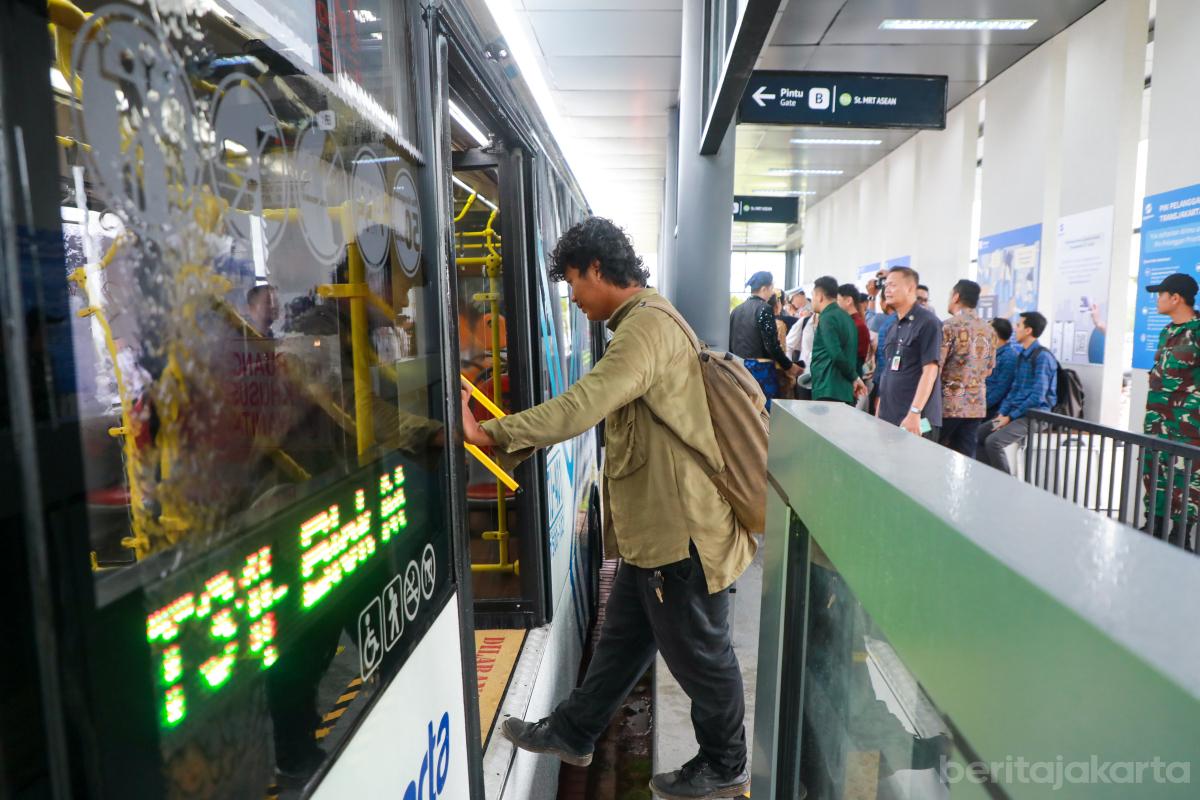
(Foto: Reza Pratama Putra)
PT Transportasi Jakarta recorded strong public enthusiasm for the Transjabodetabek PIK 2–Blok M (T31) route during its first year of operation.
Public transportation is increasingly becoming part of residents' lifestyles
The PIK 2–Blok M route served 1,409,872 passengers over the past year, marking a significant increase from the 112,344 passengers recorded during its first month of operation.
Transjakarta Public Relations and CSR Department Head, Ayu Wardhani, said the high passenger numbers reflect growing public trust in connected and easily accessible public transportation.
According to her, the route is used not only by workers and students, but also tourists and residents who want easier access to the PIK and Blok M areas without worrying about traffic and parking.
"We are seeing increased public mobility, especially during weekends and holidays, which shows that public transportation is increasingly becoming part of residents' lifestyles," Ayu said on Sunday (5/24).
Ayu explained the T31 route has also expanded public access to culinary centers, entertainment venues, public spaces, and economic activity hubs in a more practical, safe, and comfortable way.
She noted that strong public interest in Transjabodetabek services is not limited to the PIK 2–Blok M (T31) route.
"Positive responses have also been seen on other routes as connectivity between Jakarta and surrounding areas continues to expand," she said.
Ayu added that similar enthusiasm has emerged across various Transjabodetabek services, signaling that more residents are becoming open to using public transportation as a daily mobility solution.
"Transjakarta will continue strengthening safe, comfortable, and integrated services to make travel between Jakarta and surrounding areas easier for residents," she emphasized.
Since its inauguration by Jakarta Governor Pramono Anung on May 22, 2025, the route has become a popular transportation choice among workers, students, and families for both daily mobility and leisure travel.
![<?//= $potret[0]->photo_filename ?>](https://multimedia.beritajakarta.id/photo/potret-jakarta/2026/05/7PHRql87cKfbHqj1rO7enTGTc3u52qMX.jpg)